
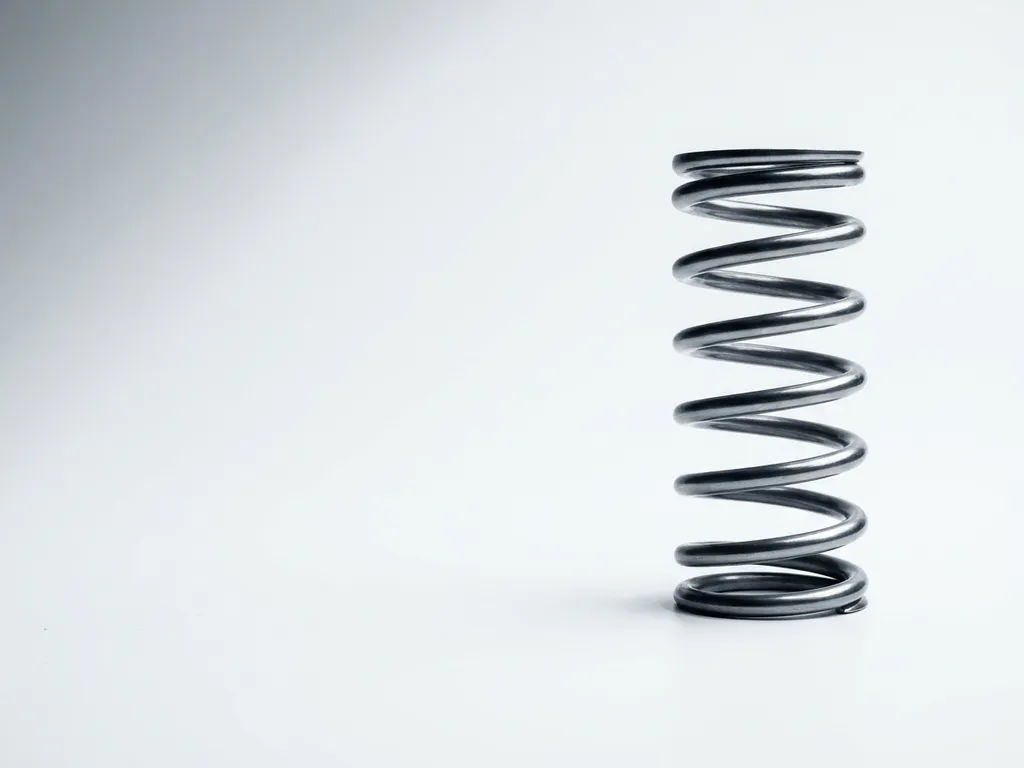
A spring mechanism is a mechanical device that stores and releases energy through elastic deformation. It uses the inherent properties of materials like steel or composite alloys to compress, extend, or twist under applied force, then return to their original shape when the force is removed. This energy storage and release capability makes spring mechanisms fundamental components in countless engineering applications, from simple door hinges to complex exoskeleton systems.
Poor spring selection is costing you system reliability
Choosing the wrong spring type or specifications leads to premature failure, inconsistent performance, and expensive redesigns. When springs cannot handle the required load cycles or environmental conditions, your entire system becomes unreliable. Engineers often underestimate fatigue limits or select springs with inadequate force characteristics, resulting in costly downtime and warranty claims. The solution is a thorough analysis of your application requirements, including load patterns, environmental factors, and expected lifespan, before selecting any spring mechanism.
Ignoring energy efficiency signals deeper design problems
Systems that waste energy through poor spring integration indicate fundamental design flaws that compound over time. Inefficient energy storage and release not only increases operational costs but also creates heat, vibration, and wear that degrades other components. This cascade effect often goes unnoticed until major failures occur. Address this by analyzing your system’s energy flow and implementing spring mechanisms that complement rather than fight against natural forces, particularly gravitational loads that can be balanced rather than constantly opposed.
What is a spring mechanism and how does it work?
A spring mechanism works by storing mechanical energy when deformed and releasing that energy when returning to its natural state. The mechanism follows Hooke’s Law, where the force required to deform the spring is proportional to the distance of deformation, creating predictable energy storage and release patterns.
The fundamental principle involves elastic materials that can undergo temporary shape changes without permanent deformation. When you compress a coil spring, stretch a tension spring, or twist a torsion spring, you add potential energy to the system. This stored energy remains available until the deforming force is removed, at which point the spring returns to its original shape and releases the energy.
Spring mechanisms operate within their elastic limit, the maximum stress a material can withstand while still returning to its original form. Beyond this limit, the material enters plastic deformation, where permanent changes occur, rendering the spring ineffective. Understanding this boundary is crucial for proper spring mechanism design and application.
What are the different types of spring mechanisms?
The main types of spring mechanisms include compression springs, extension springs, torsion springs, leaf springs, and constant force springs. Each type stores energy through different deformation methods and serves specific mechanical functions based on the direction and nature of applied forces.
Compression springs resist compressive forces and are commonly found in vehicle suspension systems and mechanical assemblies. Extension springs work under tensile loads, stretching to store energy, and are often used in garage doors and trampolines. Torsion springs store energy through twisting motion, providing rotational force in applications like clothespins and mousetraps.
Leaf springs consist of multiple flat metal strips that bend to absorb energy, traditionally used in vehicle suspensions. Constant force springs maintain consistent force output regardless of extension length, making them ideal for applications requiring steady force delivery. Gas springs use compressed gas instead of metal deformation, offering smooth operation and adjustable force characteristics for automotive and furniture applications.
How do spring mechanisms store and release energy?
Spring mechanisms store energy through elastic deformation of their material structure and release it when the deforming force is removed. The energy storage follows the relationship E = ½kx², where k represents spring stiffness and x represents displacement from the natural position.
During the loading phase, applied force causes molecular bonds within the spring material to stretch or compress, creating internal stress. This stress represents stored potential energy that remains locked in the material structure. The amount of energy stored depends on both the spring’s material properties and the degree of deformation applied.
Energy release occurs when the external force decreases or is removed entirely. The internal molecular forces drive the spring back toward its natural state, converting stored potential energy into kinetic energy. This energy transfer can perform useful work, such as closing a valve, returning a mechanism to its starting position, or providing continuous force over a specific range of motion.
What’s the difference between passive and active spring systems?
Passive spring systems operate solely through mechanical energy storage without external power, while active spring systems incorporate external energy sources like motors or actuators to modify spring behavior in real-time. Passive systems provide consistent, predictable responses based purely on mechanical properties.
Passive spring systems rely entirely on the inherent characteristics of the spring material and geometry. They respond predictably to applied forces without requiring sensors, controllers, or power sources. These systems excel in applications requiring reliability, simplicity, and consistent performance across varying conditions. Examples include door springs, suspension systems, and mechanical shock absorbers.
Active spring systems combine traditional spring elements with electronic controls, sensors, and actuators. They can adjust stiffness, damping, or force output based on real-time conditions or user requirements. While more complex and requiring power sources, active systems offer superior adaptability and performance optimization. Applications include adaptive vehicle suspensions, robotic joints, and advanced exoskeleton systems that adjust assistance levels based on user movement patterns.
Where are spring mechanisms commonly used in engineering?
Spring mechanisms are extensively used in automotive systems, industrial machinery, consumer products, and specialized applications like medical devices and defense equipment. They provide force generation, vibration control, energy storage, and motion assistance across virtually every engineering discipline.
Automotive applications include suspension systems for ride comfort, valve springs in engines, clutch mechanisms, and safety systems like airbag deployment. Industrial machinery uses springs for tool return mechanisms, vibration isolation, safety shutoffs, and material handling equipment. Consumer products incorporate springs in furniture, appliances, toys, and electronic devices for user interfaces and mechanical functions.
Specialized engineering applications leverage spring mechanisms for precise force control and energy management. Medical orthoses use springs to assist joint movement and provide corrective forces. Defense applications employ spring systems in weapon mechanisms, load-carrying equipment, and protective gear. Aerospace systems utilize springs for deployment mechanisms, vibration control, and landing gear systems where reliability under extreme conditions is paramount.
How do you design a spring mechanism for specific applications?
Designing a spring mechanism requires analyzing application requirements, including force specifications, operating environment, space constraints, and expected lifespan. The design process involves material selection, geometric optimization, and validation through testing to ensure the mechanism meets performance requirements.
Begin by defining the force-displacement relationship your application requires. Calculate maximum and minimum forces, working stroke length, and any special requirements like constant force output or variable stiffness. Consider environmental factors such as temperature range, corrosive conditions, and vibration exposure that affect material selection and protective measures.
Material selection balances strength, fatigue resistance, and environmental compatibility. Steel alloys offer high strength and durability for demanding applications, while specialized materials like titanium or composites provide weight savings or corrosion resistance. Geometric design involves optimizing wire diameter, coil dimensions, and spring configuration to achieve desired force characteristics while maintaining adequate safety factors for reliable operation.
How InteSpring helps with spring mechanism design
We specialize in developing advanced spring mechanisms that balance gravitational forces and enhance human performance through our patented energy storage technologies. Our expertise covers the complete development process from concept to certified product, focusing on applications where spring systems provide force assistance and energy efficiency.
Our comprehensive approach includes:
- Feasibility analysis to evaluate the technical and economic viability of your spring mechanism requirements
- Custom demonstrator development with functional prototypes to validate design concepts
- Detailed design optimization using our specialized knowledge of force compensation and gravity balancing
- Production support to establish sustainable manufacturing processes for your spring mechanisms
Whether you need spring mechanisms for exoskeletons, medical devices, or industrial applications, our team combines deep technical expertise in mechanical engineering with hands-on prototyping capabilities. Contact us to discuss how our spring mechanism expertise can solve your specific engineering challenges.