
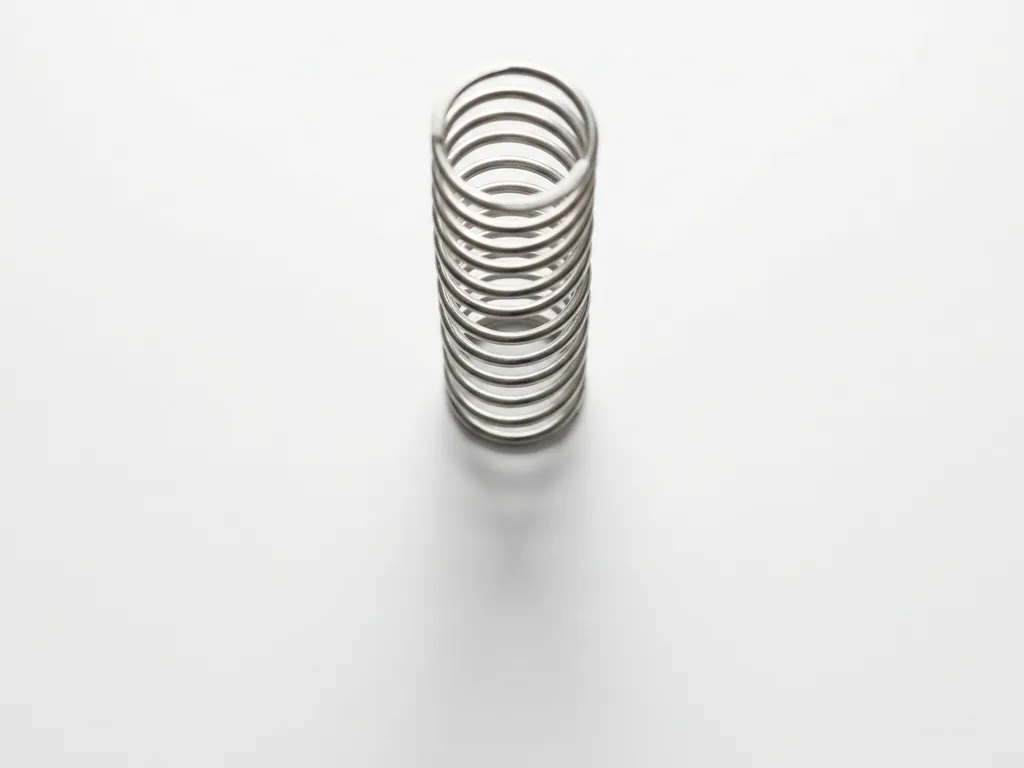
Spring balancers represent one of the most elegant solutions in mechanical engineering, using stored energy to counteract gravitational forces and reduce the effort required to move heavy objects. These ingenious devices harness the power of springs to create systems that feel weightless, transforming how we interact with tools, equipment, and even our own bodies in various applications.
Understanding spring balance systems opens the door to appreciating a technology that quietly revolutionizes industries from manufacturing to healthcare. This guide will walk you through the fundamental concepts, explore how these systems work mechanically, and help you recognize when spring balancing technology offers the optimal solution for specific challenges.
What Are Spring Balancers and Why Do They Matter?
A spring balancer is a mechanical device that uses stored spring energy to counteract the weight of an object, making it feel lighter or even weightless to the user. At its core, the system stores energy when compressed or extended, then releases that energy to assist with lifting, supporting, or moving loads.
The fundamental principle relies on energy storage mechanisms that work in opposition to gravitational forces. When properly calibrated, these spring balance systems can reduce the perceived weight of an object to nearly zero, allowing operators to manipulate heavy tools or equipment with minimal physical effort. This creates a more ergonomic working environment while maintaining precise control over the supported object.
For example, in automotive manufacturing, spring balancers support heavy pneumatic tools above assembly lines. Workers can position these tools effortlessly in any direction, while the balancer maintains the tool at whatever height the operator releases it. This eliminates the fatigue associated with repeatedly lifting heavy equipment while preserving the worker’s ability to make precise movements.
How Spring Balance Systems Compensate for Gravitational Forces
Gravitational force compensation through mechanical spring systems operates on the principle of equilibrium between stored elastic energy and gravitational potential energy. The spring mechanism stores energy when the supported object moves against the spring’s natural position, then releases that energy to assist when the object moves in the direction of gravitational pull.
The compensation process involves several key components working in harmony. The spring assembly provides the primary energy storage, while mechanical linkages transfer and direct that energy to counteract specific gravitational forces. Adjustment mechanisms allow fine-tuning of the compensation force to match the exact weight of the supported object.
Weight balancing technology achieves its effectiveness through careful engineering of the spring constant and mechanical advantage. Engineers calculate the precise spring characteristics needed to generate an upward force that equals the downward gravitational force acting on the object. When these forces balance perfectly, the object appears to float, requiring minimal effort to reposition.
Consider how a drafting table lamp with a spring-balanced arm maintains its position at any angle. The spring system continuously adjusts its assistance based on the arm’s position, providing more support when the lamp head extends horizontally and less when it hangs vertically. This dynamic response creates the smooth, effortless movement users experience.
Energy Storage and Release Mechanisms
The energy storage mechanisms in spring balancers typically employ either compression springs, extension springs, or torsional springs, each suited to different applications. Compression springs store energy when squeezed together, extension springs when pulled apart, and torsional springs when twisted around their axis.
The release of stored energy occurs continuously and proportionally to the object’s position relative to gravity. Unlike systems that provide constant force, spring-assisted devices modulate their assistance based on the mechanical advantage created by the object’s current position, delivering precisely the right amount of support at every moment.
Essential Applications for Spring Balancing Technology
Spring balancing technology finds its most valuable applications in scenarios where heavy objects require frequent repositioning with precision control. Manufacturing environments represent the largest application area, where assembly line workers manipulate tools, parts, and equipment throughout their shifts.
In medical and rehabilitation settings, force balancing solutions enable patients with limited strength to perform movements that would otherwise be impossible. Therapy equipment uses spring assistance to support limbs during rehabilitation exercises, allowing patients to practice natural movement patterns while receiving the exact amount of help their condition requires.
Industrial applications extend beyond manufacturing to include:
- Tool support systems in automotive and aerospace assembly
- Material handling equipment in warehouses and distribution centers
- Adjustable work surfaces and ergonomic workstations
- Camera and lighting equipment in photography and film production
- Laboratory equipment requiring precise positioning
Agricultural and construction industries utilize spring balancers for hand tools and portable equipment that workers must position repeatedly throughout the day. These applications reduce worker fatigue while maintaining the mobility and flexibility required for outdoor work environments.
When to Choose Spring Balancers Over Other Solutions
Spring balancers excel when applications require continuous, variable assistance rather than simple on-off support. Unlike pneumatic or hydraulic systems, mechanical spring systems provide immediate response without requiring external power sources, making them ideal for environments where reliability and simplicity are paramount.
The decision to implement spring balance systems becomes clear when evaluating specific operational requirements. Applications involving repetitive lifting, precise positioning of moderate to heavy objects, or situations where power availability is limited all favor spring-based solutions. The technology proves particularly valuable when the supported object’s weight remains constant but its position changes frequently.
Spring balancers offer advantages over electric or pneumatic alternatives in several key areas:
- No external power requirements or compressed air supply needed
- Minimal maintenance compared to hydraulic or pneumatic systems
- Immediate response with no startup delay or pressure buildup
- Inherently safe operation with predictable failure modes
- Cost-effective for applications not requiring active force modulation
However, spring systems have limitations that make other technologies more suitable for certain applications. When the supported object’s weight varies significantly, or when active force control is required, electric or pneumatic systems may provide better solutions. Spring balancers also have weight capacity limits that may not suit extremely heavy applications.
How InteSpring Helps with Spring Balance Systems
We specialize in developing custom spring balance systems that address specific operational challenges across industries. Our modular four-phase consultancy approach guides projects from initial concept through certified product delivery, ensuring each solution meets both technical requirements and economic objectives.
Our spring balancing expertise encompasses:
- Feasibility analysis to determine the technical and economic viability of spring-based solutions
- Custom demonstrator development with functional prototypes for testing and validation
- Detailed design studies incorporating human factors and safety considerations
- Production setup with sustainable supply chain development for manufacturing
Our compact team of specialists combines mechanical engineering expertise with a deep understanding of human movement and ergonomics, creating solutions that enhance both performance and user experience. Whether you need assistance with tool support systems, rehabilitation equipment, or industrial applications, we can help you determine if spring balancing technology provides the optimal solution for your specific requirements. Contact our engineering team to discuss how spring balance systems can address your operational challenges.