
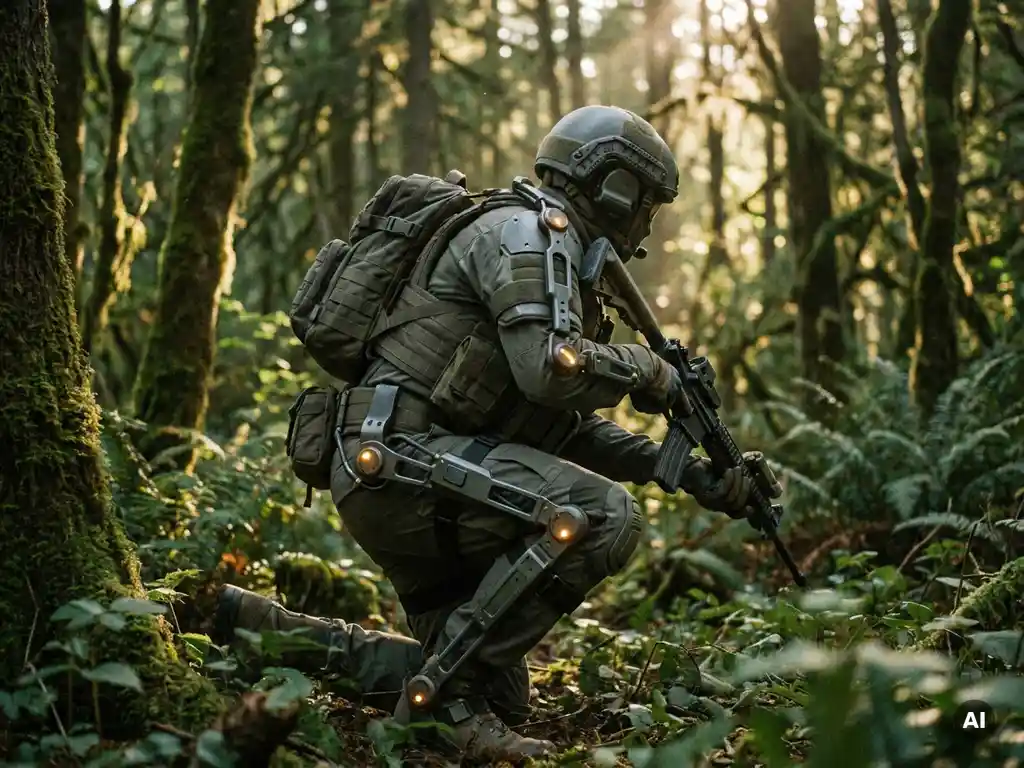
Body-worn sensing technology improves soldier performance by providing real-time data on physical condition, movement, and environmental exposure, enabling smarter decisions about pacing, load management, and medical response. These systems give commanders and medics a live picture of each soldier’s physiological state, reducing the risk of heat injury, exhaustion, and undetected trauma. The sections below unpack how each layer of this technology works and what it means for the future of military operations.
What types of data do body-worn sensors collect from soldiers?
Body-worn sensors collect physiological, biomechanical, and environmental data from soldiers during operations. Core metrics include heart rate, core body temperature, hydration status, respiratory rate, and blood oxygen saturation. Accelerometers and gyroscopes capture movement patterns, gait quality, and postural load. Some advanced systems also log GPS position, ambient temperature, and exposure to blast overpressure.
The combination of these data streams gives a layered picture of soldier readiness. Physiological markers reveal how hard the body is working and whether early signs of heat stress or fatigue are developing. Biomechanical data show whether a soldier is compensating for pain or injury through altered movement. Environmental inputs add context, helping analysts understand whether a physical decline is linked to terrain, climate, or mission tempo rather than a medical issue. Together, these inputs form a comprehensive profile that goes far beyond what a traditional field assessment can capture.
How does real-time biometric monitoring affect military decision-making?
Real-time biometric monitoring shifts military decision-making from reactive to proactive by giving commanders objective data about unit readiness before a soldier reaches a critical threshold. Instead of waiting for a soldier to report symptoms, leaders can identify physiological warning signs early and adjust task assignments, rest rotations, or medical support accordingly.
This has practical consequences at every level of command. At the squad level, a team leader can see if a member’s heart rate has been elevated for an extended period and redistribute load before performance degrades. At the medical level, a combat medic receives an alert when a soldier’s vitals deviate from baseline, enabling faster triage without requiring the soldier to self-report. At the planning level, aggregated biometric data from previous missions can inform training loads, equipment choices, and operational tempo for future deployments. The result is a more evidence-based approach to managing human performance under the demanding conditions of defense operations.
What’s the difference between passive and active wearable sensing systems for soldiers?
Passive wearable sensing systems collect and record data without intervening in the soldier’s movement or physiology, while active systems use the data they collect to trigger a physical response, such as adjusting mechanical assistance or delivering a haptic alert. The distinction matters because it determines how directly the technology affects performance in the moment.
Passive sensing systems
Passive systems function primarily as monitoring tools. A chest strap that records heart rate and transmits it to a command dashboard is a passive system. It gathers information and makes it available for human interpretation, but it does not change what the soldier experiences physically. These systems tend to be lighter, simpler, and easier to integrate into existing kit without altering how a soldier moves.
Active sensing systems
Active systems close the loop between data and action. An exoskeleton that reads muscle activation signals and adjusts the level of mechanical support it provides is an active system. So is a vest that detects a dangerous rise in core temperature and triggers a cooling mechanism. Active systems are more complex and heavier, but they can intervene in real time to prevent injury or sustain performance in ways that passive monitoring alone cannot achieve.
Most advanced defense wearables combine both approaches, using passive sensors to build a continuous data picture and active components to respond when thresholds are crossed.
How does sensing technology integrate with exoskeletons to reduce soldier fatigue?
Sensing technology integrates with exoskeletons by feeding real-time biomechanical and physiological data into the exoskeleton’s control system, allowing it to deliver assistance precisely when and where the soldier’s body needs it most. This makes the support adaptive rather than fixed, which is critical for reducing fatigue across varied terrain and mission profiles.
A well-integrated system works in several coordinated ways. Inertial measurement units track joint angles and movement speed, allowing the exoskeleton to anticipate the next phase of a step cycle and apply force at the optimal moment. Muscle activity sensors detect when specific muscle groups are approaching exhaustion and shift more of the mechanical load to the exoskeleton’s structure. Heart rate and oxygen consumption data inform the system’s overall assistance level, increasing support during high-intensity movement and reducing it during rest to preserve battery life.
The practical outcome is that soldiers carrying heavy loads, whether weapons, communication equipment, or medical supplies, experience less cumulative physical strain. This is especially relevant for leg exoskeleton applications in logistics and approach marches, where sustained load carriage over distance is one of the primary drivers of musculoskeletal injury in defense settings.
What are the biggest challenges in deploying wearable sensors in military environments?
The biggest challenges in deploying wearable sensors in military environments are durability, data security, system integration, and soldier acceptance. Each of these barriers can limit the operational value of even technically sophisticated sensing systems if not addressed during development.
- Durability: Military environments expose equipment to extreme heat, cold, moisture, dust, and physical impact. Sensors must maintain accuracy and connectivity under conditions that would disable commercial-grade devices.
- Data security: Biometric data transmitted from soldiers in the field is a potential intelligence asset for adversaries. Secure, low-latency communication protocols are essential, and any data breach could have serious operational consequences.
- System integration: Defense forces already operate complex equipment ecosystems. New sensing technology must interface with existing communication networks, command software, and medical systems without creating additional cognitive load for operators.
- Soldier acceptance: Wearables that are uncomfortable, cumbersome, or perceived as surveillance tools face resistance from the soldiers who are supposed to benefit from them. User-centered design and clear communication about how data is used are critical for adoption.
- Battery life: Continuous sensing and wireless transmission are power-intensive. In the field, recharging opportunities are limited, so power efficiency is a fundamental design constraint rather than a secondary consideration.
Addressing these challenges requires close collaboration between engineering teams, military end users, and procurement bodies throughout the development process, not just at the point of delivery.
What does the future of body-worn sensing look like for defense applications?
The future of body-worn sensing in defense applications points toward smaller, more autonomous systems that combine physiological monitoring, environmental awareness, and AI-driven decision support into a single, seamlessly integrated platform. The direction of travel in 2026 is toward sensors that are embedded directly into clothing or equipment rather than worn as separate devices.
Several developments are shaping this trajectory. Advances in flexible electronics are enabling sensors that conform to the body without restricting movement. Edge computing, where data is processed on the device rather than sent to a remote server, is reducing latency and improving security. Machine learning models trained on large datasets of soldier performance are becoming capable of predicting fatigue or injury risk before observable symptoms appear.
Microhydraulic systems tailored to the wearable market are also expanding what active exoskeleton components can achieve in terms of force output and responsiveness. When these actuators are paired with sophisticated sensing arrays, the result is a defense wearable that can adapt to a soldier’s condition with a level of precision that was not achievable even a few years ago. The longer-term vision is a fully connected soldier system where physiological data, equipment status, and mission information are unified in a single operational picture accessible to both the soldier and their command chain.
How InteSpring helps with body-worn sensing for defense
We develop engineering solutions that sit at the intersection of spring-based energy balancing, biomechanics, and wearable technology, making us a concrete partner for defense organizations looking to reduce soldier fatigue and improve field performance. Our work on the Centaur exoskeleton, developed for the Dutch Ministry of Defense, demonstrates how sensing integration and passive mechanical support can be combined into a practical, fieldable system.
Here is what we bring to defense wearable projects:
- Exoskeleton development: We design and prototype semi-passive leg exoskeletons built for real operational conditions, including load carriage during marches, drop zone logistics, and forward base operations.
- Sensing integration expertise: We integrate biomechanical and physiological sensing into wearable structures, ensuring that data collection does not compromise mobility or add unnecessary weight.
- Microhydraulic systems: Together with our partners, we have developed specialized microhydraulics tailored to the wearable and exoskeleton market, giving us a unique capability for active, sensor-driven assistance.
- Full development process: Our four-phase consultancy approach covers feasibility, demonstrator, detailed design, and serial production, so we can support a project from initial concept through to certified product.
- Hands-on demonstrations: We offer live exoskeleton demonstrations featuring more than six different systems, along with expert guidance on implementation strategy.
If you are exploring how sensing technology and wearable systems can improve performance and safety in your defense application, we would be glad to discuss the possibilities. Get in touch with our team to start the conversation.