
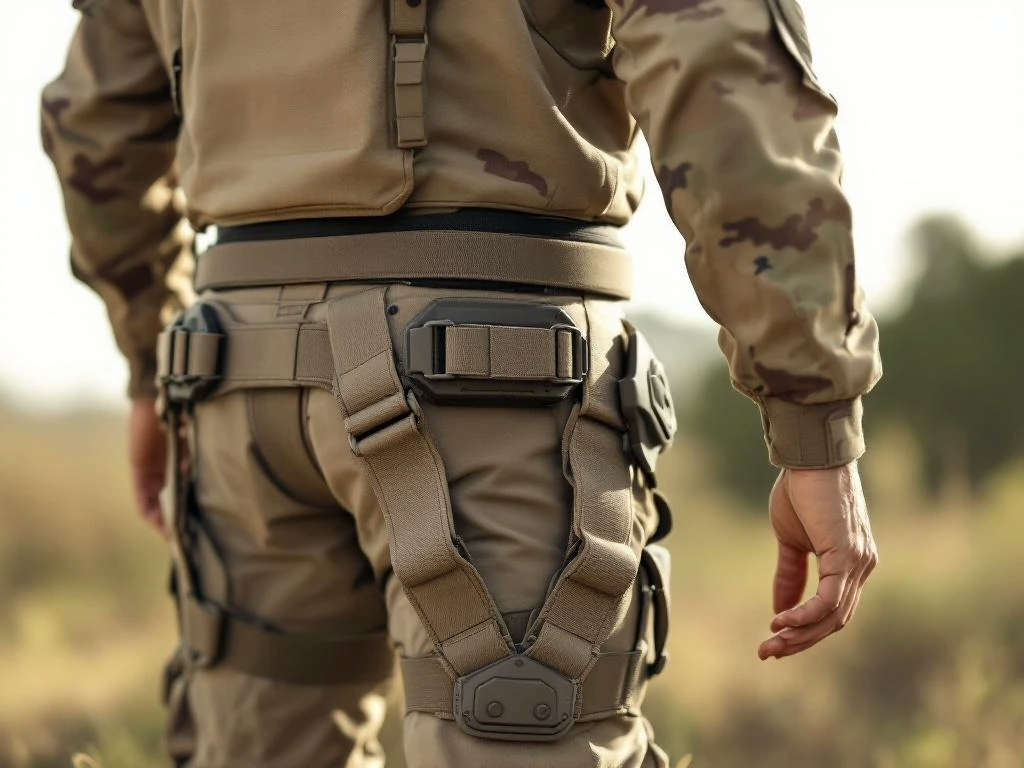
Implementing exoskeleton systems in military units requires a structured approach covering personnel preparation, operational integration, and ongoing support. Success depends on comprehensive training protocols, gradual deployment phases, and systematically addressing technical challenges. The process typically involves pilot programs, user adaptation periods, and continuous optimization to ensure effective field performance.
What are exoskeleton systems and why do military units need them?
Exoskeleton systems are wearable robotic devices that enhance human strength, endurance, and load-carrying capacity while reducing injury risk during military operations. These systems use mechanical structures, sensors, and power sources to support soldiers’ movements and redistribute weight effectively.
Military units need exoskeletons to address several operational challenges. Soldiers routinely carry heavy equipment loads exceeding 40 kilograms during missions, leading to fatigue, reduced mobility, and increased injury rates. Exoskeletons help distribute this weight across the body’s strongest muscle groups, allowing personnel to maintain operational effectiveness for longer periods.
The technology proves particularly valuable in scenarios requiring extended marches, logistics operations, and equipment transport in challenging terrain. Passive exoskeletons store and release energy through spring mechanisms, while active systems use motors to provide additional power assistance. Both approaches reduce metabolic burden and help prevent musculoskeletal injuries that commonly affect military personnel.
How do you prepare military personnel for exoskeleton adoption?
Personnel preparation begins with comprehensive education about exoskeleton technology, its benefits, and realistic expectations for performance enhancement. This foundational understanding helps address concerns and builds confidence in the new equipment.
Physical conditioning protocols focus on strengthening core muscles and improving balance, as exoskeletons alter natural movement patterns. Personnel undergo fitness assessments to ensure they meet baseline requirements for safe system operation. Training programs gradually introduce the equipment, starting with short wearing periods and progressively increasing duration.
Psychological preparation addresses common concerns about technology dependence and changes to established procedures. Leadership engagement is vital, with commanders demonstrating commitment to the technology and addressing personnel feedback openly. Change management strategies include involving experienced soldiers as early adopters who can mentor others and provide peer-to-peer support during the transition period.
What’s the step-by-step process for integrating exoskeletons into military operations?
Integration starts with a pilot program involving a small group of volunteers who test the systems in controlled environments. This phase typically lasts 4–8 weeks and focuses on basic operation, safety procedures, and initial performance evaluation.
The process follows these stages:
- Conduct a feasibility assessment and select appropriate exoskeleton models
- Establish training protocols and safety procedures
- Run a pilot program with selected personnel
- Collect performance data and user feedback
- Refine procedures based on initial results
- Expand to larger test groups for operational trials
- Implement gradual deployment across target units
- Monitor performance and adjust protocols continuously
Each phase includes structured feedback collection through surveys, performance metrics, and operational observations. This data informs adjustments to training methods, equipment configurations, and deployment strategies before progressing to the next stage.
How do you overcome common challenges when implementing military exoskeletons?
Technical issues often arise from improper fitting, inadequate maintenance, or environmental factors. Establish clear sizing protocols and ensure multiple backup units are available. Regular maintenance schedules prevent most mechanical problems, while environmental testing validates performance in various conditions.
User resistance typically stems from concerns about reliability, comfort, or changes to established procedures. Address this through transparent communication, hands-on demonstrations, and involving skeptical personnel in testing phases. Success stories from early adopters help build confidence among hesitant users.
Logistical considerations include battery management, spare parts availability, and transport requirements. Develop comprehensive supply chains and establish field maintenance capabilities. Consider weight and space requirements when planning mission logistics, ensuring exoskeleton benefits outweigh the additional logistical burden.
Performance optimization requires ongoing monitoring and adjustment. Track key metrics such as mission completion times, fatigue levels, and injury rates. Use this data to refine training protocols and identify optimal use cases for maximum effectiveness.
What training protocols ensure successful exoskeleton operation in the field?
Successful field operation requires progressive training protocols that build competency gradually while maintaining safety standards. Training begins with classroom instruction covering system components, safety procedures, and basic troubleshooting techniques.
The comprehensive training framework includes:
- Basic operating procedures covering power-up, calibration, and shutdown sequences
- Safety protocols including emergency release mechanisms and hazard recognition
- Maintenance tasks such as battery management, cleaning, and basic repairs
- Emergency procedures for system failures or medical incidents
- Mission-specific training for different operational scenarios
Practical training progresses from stationary exercises to dynamic movement patterns, load carrying, and finally mission-realistic scenarios. Personnel practice with increasing weights and distances while monitoring for proper form and system performance. Regular refresher training maintains skills and introduces updates or improvements to procedures.
Ongoing skill development includes advanced troubleshooting, peer instruction capabilities, and specialized applications. This ensures units maintain operational readiness and can adapt effectively to evolving mission requirements.
How InteSpring helps with military exoskeleton implementation
We provide comprehensive support for military organizations implementing exoskeleton technology through our proven four-phase consultancy approach. Our process covers everything from initial feasibility assessment to full operational deployment, ensuring successful integration tailored to your specific requirements.
Our military exoskeleton implementation services include:
- Feasibility studies assessing technical and operational viability for your units
- Demonstrator development with functional prototypes for hands-on evaluation
- Detailed design phases creating mission-specific solutions
- Product development establishing sustainable supply chains for ongoing support
- Comprehensive training programs covering operation, maintenance, and safety protocols
- Live demonstrations featuring our Centaur leg exoskeleton and other systems
Our Centaur system specifically addresses military load-carrying challenges through lightweight, semi-passive technology that reduces soldier fatigue during extended operations. We currently work with the Dutch Ministry of Defence and understand the unique requirements of military applications.
Ready to explore exoskeleton implementation for your military units? Contact InteSpring today to schedule a hands-on demonstration and discuss your specific operational requirements with our engineering experts.