
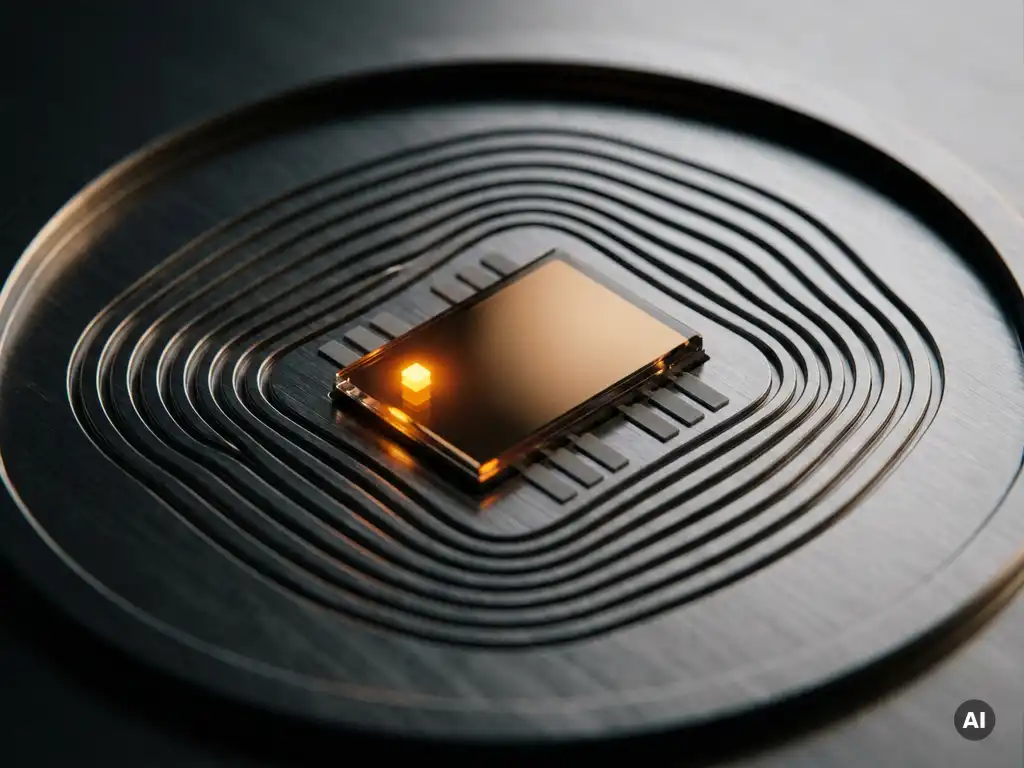
A neuromorphic chip processes only relevant acoustic events by mimicking the way biological neurons fire: it responds exclusively to changes in sound rather than continuously sampling and analyzing an audio stream. Instead of recording everything and filtering later, the chip remains dormant until a meaningful shift in the acoustic environment triggers a spike. This makes neuromorphic audio processing fundamentally different from conventional digital signal processing. The sections below unpack how each layer of this technology works, from event detection to real-world deployment.
What makes acoustic events different from continuous audio signals?
An acoustic event is a discrete, time-stamped change in sound energy, such as a sudden impact, a spoken word, or a gunshot, whereas a continuous audio signal is an unbroken stream of amplitude values sampled at a fixed rate. Traditional audio chips treat every sample as equally important. Neuromorphic systems treat silence and steady-state sound as non-events, acting only when something meaningful changes.
This distinction matters because the overwhelming majority of audio data captured by conventional microphones is redundant. A factory floor running at a constant hum, a quiet office, or an outdoor environment between incidents generates enormous volumes of data that carry no actionable information. Event-based sensing vs. traditional sensors comes down to this fundamental design choice: process everything continuously, or process only what changes. Neuromorphic architectures choose the latter, which has cascading benefits for power consumption, latency, and system complexity.
How does a neuromorphic chip detect only relevant sound changes?
A neuromorphic chip detects relevant sound changes by using an event-driven microphone front end, often called a silicon cochlea, that converts incoming sound waves into asynchronous spike trains. A spike is generated only when the sound energy at a given frequency band crosses a defined threshold relative to a recent baseline. No spike means no processing occurs downstream.
The silicon cochlea is modeled on the human inner ear, which decomposes sound into frequency channels along the basilar membrane. Each channel in the chip monitors its own frequency band independently. When a transient event, such as a door slamming or a gunshot, causes a rapid energy increase in one or more bands, those channels fire spikes in parallel. The timing and pattern of those spikes encode the event’s spectral fingerprint without ever storing a raw waveform. This approach dramatically reduces the data volume entering the processing core while preserving the information needed to classify what happened.
What role do spiking neural networks play in audio filtering?
Spiking neural networks (SNNs) are the computational engine that interprets the spike trains produced by the event-driven microphone. Unlike conventional neural networks that process dense matrices of numbers at regular clock intervals, SNNs only perform computation when a spike arrives. This means the network is effectively idle between acoustic events, consuming minimal energy while remaining ready to respond in microseconds.
In audio filtering, SNNs learn to associate specific spike patterns with specific sound categories. During training, the network is exposed to labeled acoustic events and adjusts synaptic weights so that meaningful patterns reliably activate output neurons while irrelevant noise does not. Once deployed, the trained SNN acts as a real-time classifier. When an incoming spike pattern matches a learned template closely enough, the network fires an output spike that triggers an alert or downstream action. Patterns that do not match any learned category are suppressed, effectively filtering them out at the hardware level rather than in software after the fact.
Why does event-based processing use far less power than traditional audio chips?
Event-based processing uses far less power because computation is tied directly to the arrival of spikes rather than to a continuous clock. A traditional digital signal processor (DSP) runs its arithmetic units millions of times per second regardless of whether the audio contains anything useful. A neuromorphic chip’s circuits activate only when spikes arrive, which in quiet or steady-state conditions can be a tiny fraction of the time.
This principle, known as sparse activation, means that power draw scales with acoustic activity rather than remaining constant. In environments where meaningful events are rare, such as a perimeter monitoring system or a medical device waiting for a specific sound pattern, the neuromorphic chip can operate for extended periods on a small battery. Industry experience with event-driven hardware shows that power savings of one to two orders of magnitude compared to equivalent DSP implementations are achievable in low-event-rate scenarios. For wearable and field-deployable systems where battery life is critical, this efficiency advantage is decisive.
What types of acoustic events can neuromorphic systems reliably classify?
Neuromorphic audio systems can reliably classify any acoustic event that produces a distinctive spike pattern, provided the system has been trained on representative examples of that event. Common categories include impulsive transients, tonal onsets, rhythmic patterns, and speech phonemes.
- Impulsive transients: Gunshot detection technology is one of the most studied applications. A gunshot produces a sharp, broadband pressure spike with a characteristic decay envelope that SNNs learn to distinguish from other loud impulsive sounds such as car backfires or dropped objects.
- Mechanical anomalies: Bearing failures, valve leaks, and structural impacts generate repeatable acoustic signatures that neuromorphic classifiers can flag in industrial monitoring contexts.
- Speech and vocal events: Keyword spotting and speaker activity detection benefit from neuromorphic processing because speech is itself an event-driven signal, with energy concentrated in short phonemic bursts.
- Environmental alerts: Glass breaking, alarms, and falling objects each have identifiable spectral-temporal profiles that trained SNNs can distinguish reliably.
Classification accuracy depends on the quality and diversity of training data, the number of frequency channels in the front-end cochlea, and the depth of the spiking network. For well-defined event categories with sufficient training examples, neuromorphic classifiers match or approach the accuracy of conventional deep learning models while operating at a fraction of the computational cost.
Where are neuromorphic audio chips being applied today?
In 2026, neuromorphic audio chips are being deployed across defense, industrial, medical, and consumer domains wherever low-power, low-latency sound classification is a priority.
Defense and security
Gunshot detection technology built on neuromorphic chips is being integrated into soldier-worn systems and perimeter sensors. The ability to localize and classify a muzzle blast within milliseconds, while running on a compact battery, makes event-based sensing vs. traditional sensors a clear operational advantage in field conditions. Acoustic tripwire systems and drone detection arrays are also adopting this approach.
Industrial and infrastructure monitoring
Factories, pipelines, and power substations use neuromorphic acoustic sensors to monitor machinery health continuously without the data infrastructure required by conventional always-on sensors. Because the chip only reports when something anomalous occurs, network bandwidth and storage requirements drop substantially.
Medical and wearable devices
Hearing aids and cochlear implant processors are early adopters of neuromorphic audio principles because the biological inspiration maps directly onto the application. More broadly, wearable health monitors use event-based audio to detect coughs, respiratory patterns, and swallowing sounds as clinical indicators, with battery life that conventional DSP approaches cannot match.
Smart environments
Always-on voice assistants and smart home security systems benefit from neuromorphic front ends that listen for specific trigger words or alarm sounds without streaming raw audio to the cloud, addressing both power and privacy concerns simultaneously.
How InteSpring helps with neuromorphic audio and event-based sensing
At InteSpring, we bring deep expertise in energy-efficient mechanical and mechatronic systems to the challenge of integrating neuromorphic sensing into real-world wearable and field-deployable products. Our work sits at the intersection of hardware engineering, human movement, and embedded intelligence, which makes us a natural partner for teams developing event-based acoustic solutions that need to live inside a wearable or a compact field device.
Specifically, we can support your project across several dimensions:
- Feasibility assessment: We evaluate whether neuromorphic audio sensing is technically and economically viable for your specific application, including power budgets, form factor constraints, and classification requirements.
- Demonstrator development: We build functional proof-of-concept prototypes that integrate event-based microphone front ends with our in-house prototyping capabilities, so you can validate the approach before committing to full design.
- Mechatronic integration: We design the mechanical and electronic architecture that embeds neuromorphic chips into wearables, exoskeletons, or field sensor housings, drawing on our experience with defense and medical product development.
- Supply chain setup: We help establish a scalable, certified supply chain for serial production, guided by our four-phase consultancy methodology from concept through to product.
Whether you are developing a wearable sensing platform or integrating gunshot detection technology into a defense system, we have the engineering depth to take your concept from idea to certified product. Learn more about our team and approach, or get in touch to discuss how we can support your next project.
Related Articles
- What should defense procurement teams look for in body-worn sensing systems?
- Can an engineering consultancy help with product development?
- What are the different types of spring mechanisms?
- What maintenance do spring-based lifting aids require?
- Should companies invest in exoskeletons to prevent back pain?