
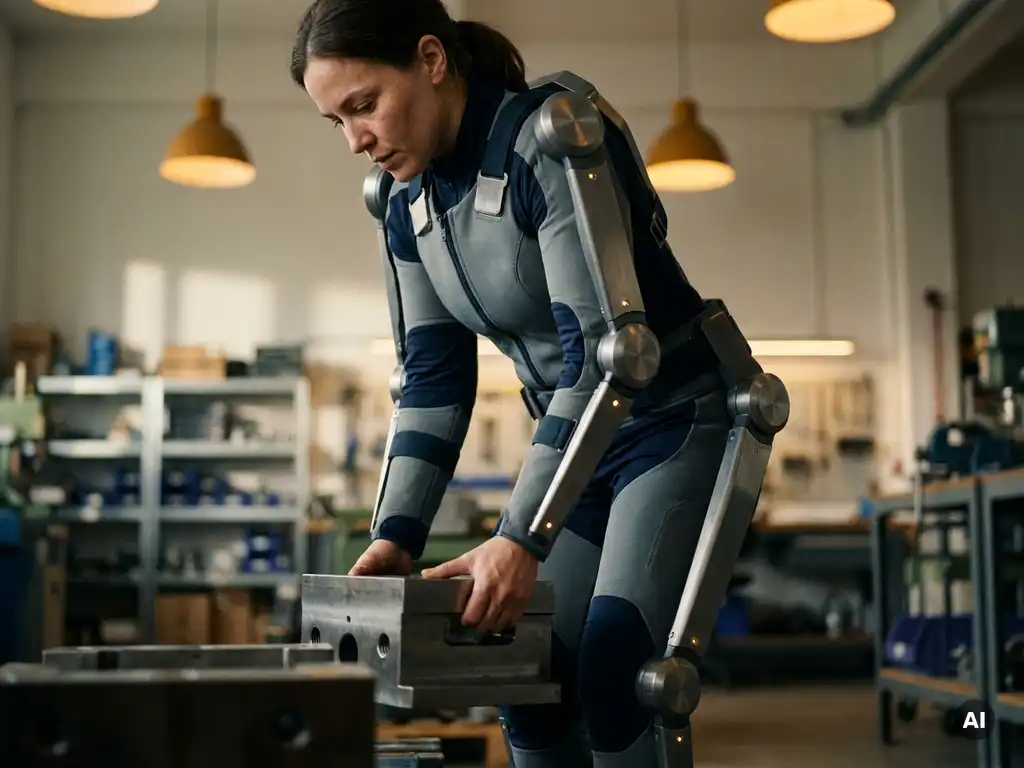
Integrated body-worn feedback systems improve physical performance by delivering real-time sensory information about movement, posture, force, and physiological state directly to the wearer. This continuous loop of data allows the body or a connected device to make immediate adjustments, reducing injury risk, improving efficiency, and extending endurance. The sections below break down how these systems work, what they measure, and where they deliver the greatest impact.
How do integrated body-worn feedback systems actually work?
Integrated body-worn feedback systems work by combining sensors, processing units, and output mechanisms into a wearable form that continuously monitors the wearer’s body and environment, then translates that data into actionable signals. The system closes the loop between physical input and behavioral or mechanical response without requiring the wearer to consult an external device.
At the hardware level, sensors embedded in garments, braces, or exoskeleton frames capture data such as joint angles, muscle activation, ground reaction forces, and skin temperature. A small onboard processor filters and interprets this raw data, comparing it against target parameters or learned baselines. The system then triggers an output, which might be a haptic vibration, an auditory cue, a visual indicator, or an automatic mechanical adjustment in the wearable itself. The entire cycle can happen in milliseconds, making the feedback feel nearly instantaneous to the wearer.
What types of feedback do body-worn systems deliver?
Body-worn feedback systems deliver four main types of output: haptic (touch-based vibration or pressure), auditory (tones or spoken cues), visual (LED indicators or heads-up displays), and mechanical (automatic resistance or assistance applied directly to the body). The choice of feedback type depends on the task environment and the cognitive load the wearer is already managing.
In high-noise or visually demanding environments, haptic feedback is often preferred because it does not compete with sight or hearing. Auditory cues work well for discrete alerts, such as signaling that a load threshold has been exceeded. Visual feedback suits training contexts where the wearer can afford to glance at an indicator. Mechanical feedback, where the wearable itself adjusts stiffness or applies a corrective force, is the most direct form and requires no conscious interpretation from the user at all.
How does real-time biofeedback improve physical performance?
Real-time biofeedback improves physical performance by giving the body immediate information it would otherwise receive too slowly or not at all. When wearers can sense subtle deviations in posture, load distribution, or muscle activation the moment they occur, they can correct them before cumulative strain develops. This shortens the learning curve for skilled movement and reduces the energy wasted on inefficient mechanics.
In physically demanding roles, the compounding effect of small inefficiencies over hours or days is significant. A soldier carrying heavy equipment on a long march, for example, may gradually shift weight onto one side without noticing. A feedback signal that catches this drift early can prevent the asymmetrical loading that leads to fatigue and injury. Over time, consistent biofeedback also builds motor memory, so correct movement patterns become habitual even when the system is not worn.
What’s the difference between open-loop and closed-loop wearable feedback?
Open-loop wearable feedback sends output signals to the wearer but does not adjust based on the wearer’s response. Closed-loop feedback continuously monitors the result of each output and modifies the next signal or action accordingly. The distinction matters because closed-loop systems are adaptive, while open-loop systems are static.
Open-loop systems
An open-loop system might vibrate when a sensor detects poor posture, but it has no way of knowing whether the wearer corrected their position. The same alert fires regardless of the outcome. These systems are simpler to design and more energy-efficient, which makes them practical for applications where a consistent reminder is sufficient and the human is expected to make all the corrective decisions.
Closed-loop systems
A closed-loop system reads the wearer’s response after sending a signal and adjusts its next action accordingly. If a mechanical exoskeleton detects that a joint is still misaligned after applying an assistive force, it can increase that force or alter its direction. This approach demands more sophisticated sensing and processing but delivers far more precise support. In defense wearables and medical orthoses, closed-loop control is increasingly the standard for applications where precision and safety are non-negotiable.
Which applications benefit most from body-worn feedback integration?
Applications that involve repetitive physical loading, high-consequence movement errors, or extended-duration tasks benefit most from body-worn feedback integration. Defense, rehabilitation, industrial logistics, and elite sport training are the sectors where the technology consistently demonstrates the clearest performance gains.
In defense technology, military personnel carry substantial loads across unpredictable terrain for extended periods. Body-worn feedback integrated into military wearables helps soldiers maintain optimal gait mechanics, manage load distribution, and avoid the cumulative injuries that degrade operational effectiveness. Defense wearables equipped with feedback systems can also alert wearers to physiological thresholds, such as heat stress or fatigue onset, before performance degrades critically.
In rehabilitation, feedback systems guide patients through correct movement patterns during recovery, reducing the risk of re-injury from compensatory habits. In industrial logistics, workers performing repetitive lifting tasks benefit from postural alerts that interrupt harmful movement patterns before they cause musculoskeletal damage. Each of these contexts shares the same core requirement: the feedback must be timely, relevant, and low enough in cognitive demand that it supports rather than distracts from the primary task.
What are the key challenges in designing effective body-worn feedback systems?
The key challenges in designing effective body-worn feedback systems are achieving signal accuracy in dynamic conditions, managing power consumption, minimizing physical bulk, and avoiding feedback overload. A system that is technically sophisticated but uncomfortable, distracting, or short-lived in the field will not be adopted regardless of its performance potential.
Sensor accuracy is particularly difficult to maintain during vigorous movement. Accelerometers and gyroscopes can drift, pressure sensors shift with sweat or clothing movement, and EMG electrodes lose contact during high-intensity activity. Designers must account for these real-world conditions rather than relying solely on controlled laboratory performance.
Power management is another persistent constraint. The more sensors and processing a system uses, the faster it drains a battery. In defense applications, where recharging opportunities may be limited and weight budgets are strict, this trade-off is especially acute. Designers often use duty-cycling strategies, where sensors sample intermittently rather than continuously, to extend operational life without sacrificing meaningful data quality.
Perhaps the most overlooked challenge is feedback overload. If a system generates too many alerts, wearers begin to ignore them, a well-documented phenomenon in industrial and clinical settings. Effective system design prioritizes only the signals that are actionable and meaningful, filtering out noise so that every piece of feedback the wearer receives genuinely warrants attention.
How InteSpring helps with body-worn feedback systems
We at InteSpring bring together mechanical engineering, mechatronics, and human movement expertise to develop body-worn systems that are not only technically advanced but genuinely practical in demanding real-world environments. Our work spans defense technology, medical orthoses, and industrial wearables, giving us a broad foundation for tackling the full range of challenges that integrated feedback systems present.
Here is what working with us looks like in practice:
- Feasibility assessment: We evaluate the technical and economic viability of your feedback system concept before significant resources are committed.
- Prototype development: Our in-house prototyping capabilities allow us to move quickly from concept to functional demonstrator, validating feedback mechanisms in realistic conditions.
- Closed-loop system design: We design adaptive feedback architectures that respond to wearer behavior in real time, drawing on our experience with defense wearables like the Centaur exoskeleton and medical orthoses like Hermes.
- Microhydraulics and actuation: Together with our partners, we have developed specialized microhydraulics tailored for the wearable market, enabling precise mechanical feedback in compact, lightweight form factors suited to military and industrial applications.
- Supply chain setup: We support the transition from prototype to serial production, ensuring your feedback system can scale reliably.
Whether you are developing a new defense wearable, a rehabilitation device, or an industrial exoskeleton, we can guide the process from initial idea to certified product. Get in touch with our team to discuss how integrated body-worn feedback can work for your specific application.
Related Articles
- What is the difference between a prototype and a proof of concept?
- How do zero-gravity arms make heavy tools weightless?
- How do lifting aids support heavy machinery maintenance?
- What are the benefits of combining physical therapy with adaptive orthoses?
- How do ankle-foot orthoses (AFOs) support mobility?