
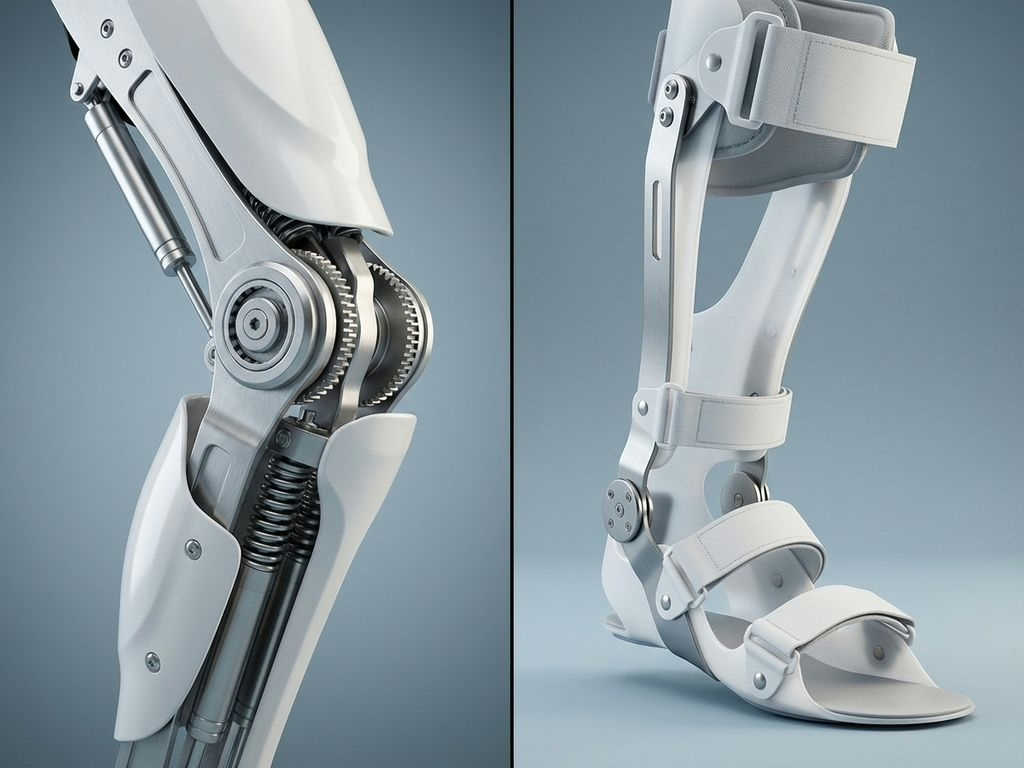
The main difference between an exoskeleton and an orthosis lies in their purpose and technology. Exoskeletons are robotic frameworks designed to enhance human capabilities such as strength and endurance, while orthoses are medical devices that support, correct, or align body functions. Exoskeletons boost performance for healthy users, whereas orthoses help people with injuries or mobility impairments. Understanding these distinctions helps you choose the right wearable assistive technology for your specific needs.
What exactly is an exoskeleton and how does it work?
An exoskeleton is an external robotic framework that augments human physical capabilities by providing additional strength, endurance, or mobility support. These wearable devices work alongside your natural movements to amplify your physical performance, making tasks easier and reducing strain on your body.
Exoskeletons operate through sophisticated systems of motors, sensors, and control mechanisms. The sensors detect your intended movements and muscle activity, while the control system processes this information to activate motors or actuators that provide assistance. This creates a seamless collaboration between human intent and mechanical support.
There are two main types of exoskeletons. Active exoskeletons use powered motors and batteries to provide direct force assistance, making them ideal for heavy lifting or endurance tasks. Passive exoskeletons rely on springs, elastic elements, or mechanical systems to store and release energy from your movements, offering support without external power sources.
What is an orthosis and what does it do for users?
An orthosis is a medical device designed to support, align, correct, or improve the function of movable parts of the body. Unlike exoskeletons, which enhance normal function, orthoses help restore proper movement patterns and provide therapeutic benefits for people with injuries, disabilities, or chronic conditions.
Orthoses work through structural support and biomechanical correction. They stabilise joints, redistribute forces across body segments, and guide movement patterns to promote healing or compensate for impaired function. The device essentially acts as an external support system that works with your body’s natural mechanics.
Different types of orthoses serve various therapeutic purposes. Ankle-foot orthoses help people with foot drop or ankle instability, while spinal orthoses support the back during recovery from injury. Upper-limb orthoses assist with arm and hand function, and knee orthoses provide stability for damaged joints. Each type addresses specific medical conditions and functional limitations.
What’s the main difference between exoskeletons and orthoses?
The primary distinction lies in their intended purpose: exoskeletons enhance normal human capabilities, while orthoses correct or support impaired functions. Exoskeletons help healthy individuals perform better, whereas orthoses help people with medical conditions function as normally as possible.
Technology levels differ significantly between the two. Exoskeletons typically incorporate advanced robotics, artificial intelligence, and sophisticated control systems. Orthoses generally use simpler mechanical designs, though some modern versions include electronic components for improved functionality.
Their applications also vary considerably. Exoskeletons are used in industrial settings, military operations, and physically demanding work environments where performance enhancement is valuable. Orthoses are primarily used in healthcare, rehabilitation, and daily living situations where medical support is necessary.
User goals represent another key difference. Exoskeleton users seek performance boosts, increased productivity, or reduced fatigue during demanding tasks. Orthosis users aim for pain relief, improved mobility, injury prevention, or restoration of normal function.
Which situations call for an exoskeleton versus an orthosis?
Exoskeletons excel in demanding physical environments where healthy individuals need performance enhancement. Industrial workers benefit from exoskeletons during repetitive lifting, construction workers use them for overhead tasks, and military personnel employ them for carrying heavy equipment over long distances.
Consider exoskeletons when you need to reduce physical strain during normal work activities, increase lifting capacity safely, or maintain endurance during prolonged physical tasks. They are particularly valuable in manufacturing, logistics, construction, and defence applications where human performance enhancement directly impacts productivity and safety.
Orthoses are appropriate for medical situations involving injury recovery, chronic conditions, or mobility impairments. People with ankle injuries, back problems, joint instability, or neurological conditions benefit from orthotic support. They are also useful for preventing re-injury during sports or physical activities.
Choose orthoses when you have a diagnosed medical condition affecting movement, need support during rehabilitation, want to prevent further injury, or require assistance with daily activities due to physical limitations. Healthcare professionals typically recommend orthoses as part of treatment plans.
How do you choose between an exoskeleton and an orthosis for your needs?
Start by identifying your primary goal: performance enhancement or medical support. If you’re healthy and want to improve physical capabilities, explore exoskeletons. If you have a medical condition or injury affecting movement, consider orthoses with professional guidance.
Evaluate your specific requirements carefully. Consider the tasks you need to perform, the duration of use, your physical condition, and any medical restrictions. Exoskeletons suit demanding work environments, while orthoses address specific medical needs and functional limitations.
Budget considerations play an important role in your decision. Exoskeletons typically require higher initial investments and may need maintenance or training. Orthoses often have lower costs and may be covered by health insurance when medically necessary.
Consult healthcare professionals when medical conditions are involved. Physiotherapists, occupational therapists, or orthotists can assess your specific needs and recommend appropriate solutions. For workplace applications, consider ergonomic assessments and safety evaluations before implementing exoskeleton solutions.
How InteSpring helps with wearable assistive technology solutions
We specialise in spring-based energy-balancing systems that bridge the gap between exoskeletons and orthoses through innovative mechanical solutions. Our expertise in gravitational force compensation creates devices that enhance human performance while providing therapeutic benefits.
Our product range demonstrates this versatile approach:
- Centaur – A lightweight leg exoskeleton for military applications that reduces fatigue during equipment transport.
- Hermes – A passive ankle orthosis that restores natural foot positioning for people with pes equinus.
- Laevo – A back support system that prevents injury while maintaining workplace mobility.
We offer comprehensive consultancy services covering feasibility studies, demonstrator development, detailed design, and production setup. Our hands-on demonstrations feature multiple exoskeleton systems, allowing you to experience different technologies and understand implementation strategies.
Whether you need performance-enhancement solutions or therapeutic support devices, our engineering expertise in spring systems and human movement enables us to create innovative wearable technology tailored to your specific requirements. Contact us to explore how our assistive technology solutions can address your unique challenges.