
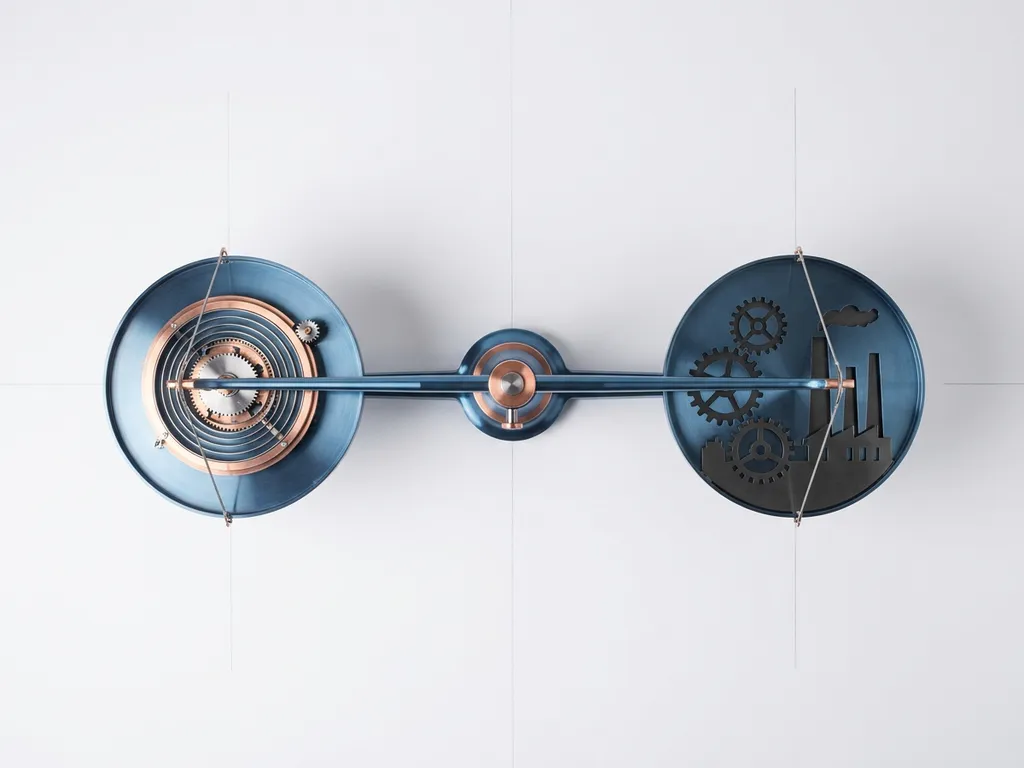
Energy balancing technology uses mechanical systems, typically springs and counterweights, to offset gravitational forces and reduce the physical effort required to move heavy objects or support body weight. This technology finds applications across the defense, healthcare, manufacturing, logistics, and agriculture sectors, where it enhances human performance, reduces injury risk, and improves operational efficiency through force compensation mechanisms.
Manual lifting without force compensation is costing you worker health and productivity
Workers in physically demanding industries face chronic back injuries, fatigue, and reduced productivity when handling heavy loads without mechanical assistance. These injuries lead to increased workers’ compensation claims, higher turnover rates, and decreased operational efficiency. Implementing energy balancing systems like exoskeletons or spring-assisted lifting devices can dramatically reduce physical strain, allowing workers to maintain performance throughout their shifts while protecting their long-term health.
Outdated equipment design is limiting your operational capabilities
Traditional tools and equipment often require excessive human effort to operate effectively, creating bottlenecks in workflows and limiting what tasks workers can safely accomplish. This forces organizations to either accept reduced productivity or risk worker injury from overexertion. Modern energy balancing solutions can transform existing equipment by adding force compensation, enabling workers to handle heavier loads, work for longer periods, and safely access previously challenging operational scenarios.
What is energy balancing technology and how does it work?
Energy balancing technology uses springs, counterweights, or other mechanical systems to store and release energy that compensates for gravitational forces. It works by creating an opposing force that reduces the effort required to lift, hold, or move heavy objects, effectively making them feel lighter or weightless.
The core principle involves storing potential energy when an object moves in one direction, then releasing that energy to assist movement in the opposite direction. Spring-based systems are particularly effective because they can be tuned to provide specific force profiles that match the weight and movement patterns of the supported load.
Modern energy balancing systems often incorporate smart mechanisms that adjust their assistance based on the task requirements. These systems can be passive, requiring no external power, or active, using sensors and actuators to provide precise force compensation throughout complex movement patterns.
Which defense applications benefit from energy balancing systems?
Defense applications benefit from energy balancing through load-carrying exoskeletons, weapon stabilization systems, and equipment transport solutions. These systems reduce soldier fatigue during long missions, improve accuracy with heavy weapons, and enable personnel to carry more equipment over greater distances.
Military personnel often carry equipment loads exceeding 60 pounds during extended operations, leading to rapid fatigue and reduced combat effectiveness. Leg exoskeletons with energy balancing technology can reduce the metabolic cost of walking with heavy loads by transferring weight to the ground through the exoskeleton frame rather than the soldier’s body.
Weapon systems also benefit significantly from force compensation. Heavy machine guns, anti-tank weapons, and precision instruments become more manageable when mounted on spring-balanced supports that counteract their weight while maintaining stability for accurate targeting.
How does energy balancing technology help in healthcare and rehabilitation?
Healthcare applications use energy balancing in orthotic devices, rehabilitation equipment, and assistive mobility systems. These technologies help patients regain movement, reduce therapist strain during treatments, and provide support for individuals with mobility limitations or muscle weakness.
Ankle orthoses with negative stiffness springs can restore natural foot positioning for patients with conditions like pes equinus, where traditional braces would restrict movement. The spring system provides corrective forces while allowing normal joint motion, improving patient comfort and treatment outcomes.
Physical therapy equipment incorporates energy balancing to support patients during movement exercises. Overhead suspension systems with spring assistance allow patients to practice walking or arm movements without bearing their full body weight, enabling earlier mobilization and more intensive therapy sessions.
What manufacturing and industrial processes use energy balancing solutions?
Manufacturing operations use energy balancing in assembly line tools, material handling systems, and worker support equipment. These applications reduce repetitive strain injuries, improve precision in assembly tasks, and enable workers to handle heavier components safely throughout their shifts.
Assembly line workers frequently use spring-balanced tool supports that eliminate the weight of heavy pneumatic tools, welding equipment, or fastening devices. This reduces arm and shoulder fatigue while maintaining precise control over tool positioning, leading to higher quality work and fewer ergonomic injuries.
Material handling benefits from energy balancing through lifting assists and conveyor systems that use springs to reduce the force required to move products between workstations. These systems are particularly valuable in automotive manufacturing, where workers must repeatedly lift and position heavy components like engines or body panels.
Why do logistics and warehousing operations need energy balancing technology?
Logistics operations require energy balancing to reduce worker fatigue during repetitive lifting, improve package handling speed, and minimize workplace injuries in high-volume environments. These systems enable workers to maintain productivity throughout long shifts while reducing the physical toll of constant lifting and moving.
Warehouse workers often lift thousands of packages daily, with weights ranging from a few pounds to over 50 pounds. Back-support exoskeletons with spring assistance can reduce spinal loading by 20-40%, significantly decreasing the risk of back injuries that account for a large percentage of warehouse worker compensation claims.
Sorting and loading operations benefit from spring-balanced lifting aids that make heavy packages feel lighter, allowing workers to move items more quickly and with better control. This is especially important in e-commerce fulfillment centers where speed and accuracy directly impact customer satisfaction and operational costs.
How can agriculture benefit from force compensation systems?
Agricultural applications use force compensation in harvesting equipment, livestock handling systems, and field maintenance tools. These systems reduce farmer fatigue during labor-intensive tasks, enable handling of heavier loads, and improve safety when working with large animals or equipment.
Fruit and vegetable harvesting requires workers to repeatedly reach overhead and carry heavy baskets or bags. Spring-assisted harvesting suits can support the weight of collection containers while providing back support during bending and reaching motions, allowing workers to harvest more efficiently with less physical strain.
Livestock operations benefit from energy balancing in gate systems, feeding equipment, and animal restraint devices. Spring-balanced gates require minimal effort to operate even when they’re large enough for tractors, while feeding systems can use counterweights to make heavy feed dispensers easier to position and operate.
How InteSpring helps with energy balancing solutions
We provide comprehensive energy balancing solutions through our modular four-phase consultancy approach, taking your project from initial concept to a certified product. Our expertise in spring-based force compensation systems enables us to create custom solutions for defense, healthcare, manufacturing, and agricultural applications.
Our development process includes:
- Feasibility studies to assess the technical and economic viability of your energy balancing requirements
- Demonstrator development with initial prototypes to validate concepts
- Detailed design studies with functional prototypes for testing and refinement
- Product development support to establish sustainable supply chains for serial production
Our compact team of specialists combines mechanical, structural, and mechatronic engineering expertise with in-house prototyping capabilities and a strong supplier network. Whether you need a passive ankle orthosis, a load-carrying exoskeleton, or custom industrial lifting assistance, we can develop the right energy balancing solution for your specific application. Contact us to discuss how our spring-based force compensation technology can address your operational challenges.