
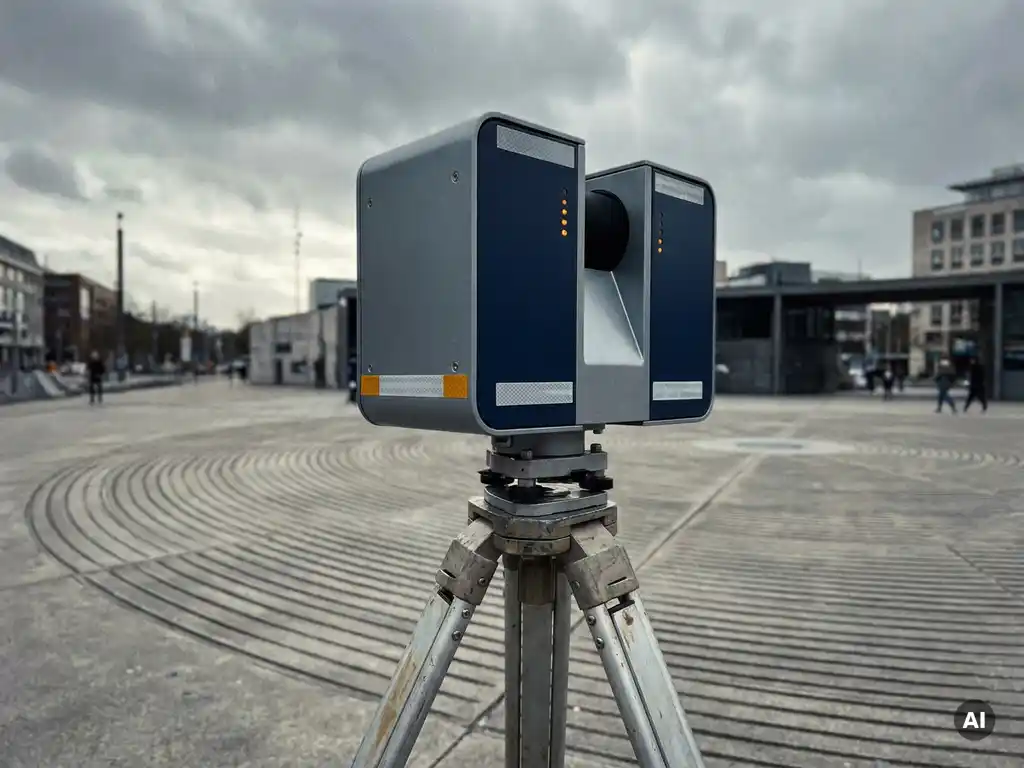
Event-based sensing improves real-time gunshot localization by capturing the precise microsecond-level timestamp of a shockwave or muzzle blast the instant it crosses a detection threshold, rather than processing continuous audio streams in fixed intervals. This eliminates the buffering delays and timing ambiguities that plague conventional acoustic systems, enabling time-difference-of-arrival (TDOA) calculations that are accurate enough to pinpoint a shooter’s position within meters. The sections below unpack how this works, what accuracy gains are realistic, and which operational environments benefit most.
How does traditional acoustic gunshot detection fall short?
Traditional acoustic gunshot detection systems record sound continuously, then analyze stored audio frames to identify a gunshot signature after the fact. This frame-based approach introduces latency between the moment a shot is fired and the moment the system registers it, which directly degrades localization accuracy because any timing error translates into positional error when calculating where a sound originated.
Several structural weaknesses compound this problem:
- Sampling lag: Conventional microphones and analog-to-digital converters sample sound at fixed intervals. A gunshot that falls between two sample windows is timestamped at the wrong moment, introducing errors that can stretch to tens of milliseconds.
- Processing overhead: Frame-based systems must buffer audio, run signal processing algorithms, and apply noise filters before a detection decision is made. Each step adds latency.
- False positive rates: Impulsive sounds such as vehicle backfires, industrial impacts, or door slams share spectral characteristics with gunshots. Conventional systems struggle to distinguish them reliably in noisy environments, forcing operators to verify alerts manually.
- Power and bandwidth demands: Continuously streaming high-quality audio from multiple sensor nodes consumes significant energy and radio bandwidth, limiting how many nodes can realistically be deployed in a networked array.
The net result is a system that can confirm a shot was fired but often cannot localize the shooter with the precision needed for an immediate tactical or medical response.
What is event-based sensing and how does it differ from conventional sensors?
Event-based sensing is a paradigm in which a sensor only generates output when a meaningful change in the environment occurs, rather than recording data at a fixed clock rate. Each output is a discrete event paired with a high-resolution timestamp, typically accurate to the microsecond level. The approach is modeled on the way biological sensory neurons fire only when stimulated, which is why the underlying hardware is often called a neuromorphic chip.
The contrast with conventional sensors is fundamental rather than incremental:
- Conventional sensors sample the world at a fixed rate regardless of whether anything interesting is happening. They produce a constant stream of data that must be processed, most of which carries no useful information.
- Event-based sensors are silent until a threshold is crossed. When a pressure wave, light pulse, or acoustic impulse triggers the sensor, it immediately emits a timestamped event and returns to a waiting state.
For acoustic applications, an event-based microphone or pressure sensor detects the sharp leading edge of a gunshot’s shockwave or muzzle blast and logs the exact moment of arrival with sub-millisecond precision. No buffering, no frame alignment, no post hoc extraction from a continuous recording. The event is the data.
This architecture also makes event-based systems inherently power-efficient. A neuromorphic chip running an acoustic node consumes energy only when events occur, which is particularly valuable for battery-powered sensor networks deployed across wide areas.
How does an event-based sensor detect and timestamp a gunshot signal?
An event-based sensor detects a gunshot by monitoring the incoming acoustic pressure signal against a preset threshold. The instant the signal crosses that threshold, the sensor’s asynchronous circuitry fires and records a timestamp using an onboard high-resolution clock. The entire detection-to-timestamp cycle happens in hardware, bypassing the software processing layers that slow down conventional systems.
The detection sequence works roughly as follows:
- Threshold monitoring: The sensor continuously compares incoming signal amplitude to a configurable threshold calibrated to distinguish impulsive transients from ambient noise.
- Threshold crossing event: When a gunshot’s leading pressure wave exceeds the threshold, the sensor circuit triggers asynchronously, meaning it does not wait for the next clock cycle.
- Timestamp assignment: A hardware timer records the exact time of crossing to microsecond or even nanosecond resolution, depending on the neuromorphic chip architecture.
- Event transmission: The timestamped event is transmitted to a central processing node, consuming only a tiny data packet rather than a continuous audio stream.
- TDOA computation: A central processor compares timestamps from multiple sensors in the network. The differences in arrival times are fed into a localization algorithm that calculates the shooter’s position.
Because the timestamp is assigned at the hardware level the moment the wavefront arrives, the timing data is as close to ground truth as current electronics allow. This is the critical advantage over software-based detection, where the timestamp reflects when a processor got around to analyzing a buffered sample rather than when the sound actually arrived.
What accuracy gains does event-based sensing offer for localization?
Event-based sensing can reduce timing errors in gunshot localization from tens of milliseconds to single-digit microseconds, which translates directly into a dramatic reduction in positional error. Because sound travels roughly 340 meters per second, a timing error of just one millisecond corresponds to a positional uncertainty of about 34 centimeters. Shaving timing error by two orders of magnitude therefore moves localization accuracy from tens of meters down to sub-meter ranges under favorable conditions.
Several factors determine how much of this theoretical gain is realized in practice:
- Sensor network geometry: Localization accuracy scales with the number of sensors and how well they are distributed spatially. A wider baseline between nodes improves angular resolution.
- Clock synchronization: All sensors in the network must share a common time reference. GPS-disciplined clocks or Precision Time Protocol (PTP) over a wired network can synchronize nodes to sub-microsecond accuracy, preserving the advantage of event-based timestamps.
- Environmental propagation effects: Wind, temperature gradients, and reflective surfaces distort sound propagation and introduce errors that no sensor technology can fully eliminate. Event-based sensing removes the instrumentation error but cannot remove physics.
- Threshold calibration: If the detection threshold is set too low, background noise generates spurious events that corrupt TDOA calculations. If set too high, the sensor may miss the wavefront’s leading edge and timestamp a later portion of the signal.
Overall, the accuracy improvement is most pronounced in environments where timing precision is the dominant source of error, such as open terrain with low ambient noise. In acoustically complex urban environments, propagation modeling becomes equally important alongside sensor timing.
What are the main challenges of deploying event-based gunshot localization in the field?
Deploying event-based gunshot localization operationally introduces engineering and logistical challenges that go beyond the sensor technology itself. The three most significant are clock synchronization across distributed nodes, threshold management in dynamic acoustic environments, and integration with existing command-and-control infrastructure.
Clock synchronization at scale
The entire value of microsecond-accurate timestamps collapses if the clocks across sensor nodes drift relative to one another. In a fixed installation, wired PTP synchronization is straightforward. In mobile or rapidly deployed networks, GPS-based timing is the practical solution, but GPS signals can be denied, jammed, or simply unavailable in dense urban canyons or indoor environments. Maintaining synchronization without GPS requires onboard oscillators with very low drift rates, which increases hardware cost and complexity.
Threshold management and false event filtering
Setting a fixed threshold works well in a controlled environment but fails in the field, where ambient noise levels shift continuously. A helicopter passing overhead, a vehicle engine, or construction equipment can all generate impulsive transients that trigger false events. Adaptive thresholding algorithms that adjust in real time help, but they add computational load and introduce their own tuning challenges. Multi-modal sensors that combine acoustic detection with optical or vibration sensing can cross-validate events and suppress false positives more reliably.
Which applications benefit most from event-based gunshot localization?
Applications that require an immediate, precise response to a shooting event benefit most from event-based gunshot localization. Defense and law enforcement operations top the list, but the technology is also highly relevant for border security, critical infrastructure protection, and autonomous systems that need to react to ballistic threats without human-in-the-loop delays.
The most compelling use cases include:
- Infantry and dismounted soldier protection: Soldiers on patrol need shooter direction and distance within seconds of a first shot to take cover and return fire effectively. Sub-meter localization at low latency directly improves survivability.
- Unmanned ground and aerial vehicles: Autonomous platforms cannot rely on a human operator to interpret a gunshot. Event-based sensing integrated with a neuromorphic chip provides the low-latency, low-power detection needed to trigger an immediate evasive or protective response onboard the vehicle.
- Forward operating base perimeter security: Sensor arrays around a fixed position can continuously monitor for incoming fire and cue cameras or countermeasures toward the shooter’s location faster than any manually operated system.
- Urban law enforcement: Rapid shooter localization in dense environments helps dispatch units to the correct block rather than the general neighborhood, reducing response time meaningfully.
- Sniper detection: Distinguishing a supersonic projectile’s shockwave from the muzzle blast and using both signals to back-calculate the shooter’s position is a classic TDOA problem where event-based timing precision offers a clear advantage over frame-based systems.
In each of these scenarios, the common requirement is speed and precision under adverse conditions, exactly the operating envelope where event-based sensing vs. traditional sensors shows its greatest advantage. Systems that also need to run on limited power budgets, such as wearable soldier electronics or small UAVs, gain an additional benefit from the neuromorphic chip’s inherent energy efficiency.
How InteSpring supports advanced sensing in wearable defense systems
At InteSpring, we bring deep expertise in mechanical, mechatronic, and human-interactive engineering to the development of wearable systems for demanding operational environments. While our core technology centers on spring-based energy balancing, our work on platforms like the Centaur exoskeleton for the Dutch Ministry of Defense means we understand exactly what it takes to integrate sensitive electronics, sensors, and actuators into systems that soldiers carry and depend on in the field.
When it comes to supporting the integration of advanced sensing technologies such as event-based gunshot localization into wearable defense platforms, we offer:
- Feasibility assessment: We evaluate whether a sensing or actuation concept is technically and economically viable before significant resources are committed.
- Demonstrator development: We build working prototypes that prove the concept in realistic conditions, including the mechanical integration of sensor hardware into load-bearing wearable structures.
- Detailed design and functional prototyping: Our engineers work through the full mechanical, structural, and mechatronic design to produce a system ready for field trials.
- Supply chain setup: We help establish a sustainable production pathway from prototype to certified product, drawing on our strong supplier network.
If you are developing a defense or security platform that requires precise, low-latency sensing integrated into a wearable or robotic system, we would welcome the conversation. Contact our team to discuss how we can support your project from concept through to certified product.