
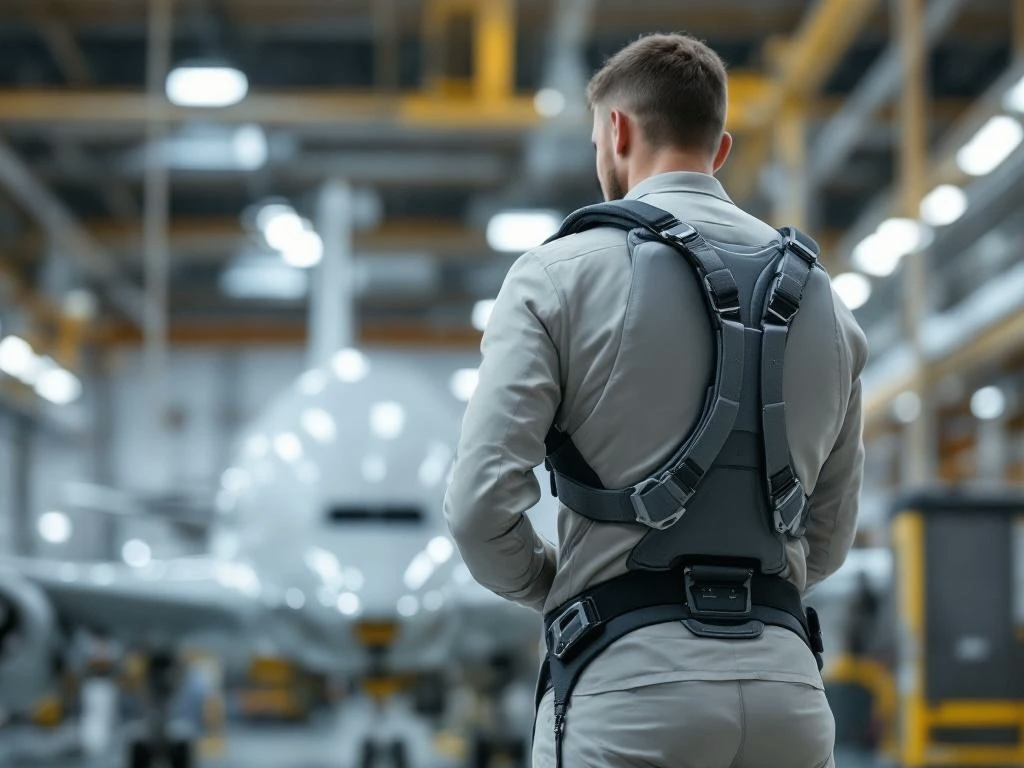
Exoskeletons play a vital role in aerospace assembly by reducing worker fatigue, preventing injuries, and improving precision during aircraft manufacturing. These wearable devices provide mechanical support for lifting heavy components, working overhead, and maintaining awkward positions for extended periods. They help aerospace workers maintain productivity while protecting them from the physical demands of assembling complex aircraft systems.
What are exoskeletons and how do they work in aerospace manufacturing?
Exoskeletons are wearable mechanical devices that augment human strength and endurance by providing external structural support. In aerospace manufacturing, they work by redistributing weight loads and reducing muscle strain during repetitive tasks. The technology uses springs, motors, or pneumatic systems to assist natural body movements.
These devices attach to specific body parts and move with the worker, providing support exactly when needed. Passive exoskeletons use springs and mechanical linkages to store and release energy during movement, while active systems employ motors and sensors to provide powered assistance. The support follows the worker’s natural motion patterns, making tasks like overhead drilling, heavy component installation, and prolonged positioning significantly easier.
Aerospace assembly environments present unique challenges that exoskeletons address effectively. Workers often spend hours installing components above shoulder height, handling parts weighing 10–50 pounds repeatedly, and maintaining precise positioning while fighting fatigue. The technology translates directly to improved task performance by reducing the physical burden on workers’ bodies.
Why do aerospace assembly workers need exoskeleton support?
Aerospace assembly workers face significant physical challenges that make exoskeleton support valuable for maintaining health and productivity. The work involves repetitive overhead tasks, handling heavy components, and holding awkward positions for extended periods. These conditions create high injury risks and fatigue that affect both worker well-being and assembly quality.
Working overhead represents one of the most demanding aspects of aircraft assembly. Installing ceiling panels, wiring harnesses, and structural components requires workers to hold their arms above shoulder height for hours. This position quickly leads to shoulder strain, neck tension, and upper back fatigue. Without support, workers experience decreased precision and increased error rates as muscles tire.
Heavy component handling adds another layer of physical demand. Aircraft parts like avionics boxes, structural brackets, and interior panels require careful positioning while managing significant weight. Repetitive lifting and positioning of these components throughout a shift creates cumulative stress on the back, shoulders, and arms. The precision required for aerospace assembly means workers cannot simply rush through these tasks to reduce exposure time.
Prolonged awkward positioning compounds these challenges. Aircraft assembly often requires workers to reach into confined spaces, work at unusual angles, or maintain specific postures while completing detailed tasks. These positions strain muscles and joints in ways that lead to both immediate fatigue and long-term injury risks.
What types of exoskeletons are used in aerospace assembly?
Aerospace assembly uses several types of exoskeletons designed for specific physical demands. Passive systems rely on springs and mechanical energy storage, while active systems provide powered assistance. Upper body support systems address overhead work, back support handles lifting tasks, and specialised designs target unique aerospace assembly requirements.
Passive exoskeletons represent the most common choice for aerospace applications. These systems use springs, elastic elements, and mechanical linkages to store energy during movement and release it to assist workers. They require no power source and offer reliable support throughout long shifts. Passive systems work particularly well for repetitive overhead tasks and consistent lifting patterns.
Active exoskeletons provide powered assistance through motors and actuators. These systems offer more precise control and can adapt to varying load conditions, but they require batteries and more complex maintenance. Active systems excel in applications requiring variable assistance levels or when workers handle components with significantly different weights.
Upper body support systems focus on shoulder and arm assistance for overhead work. These devices typically attach to the torso and arms, providing upward force that counteracts gravity when workers raise their arms. They prove particularly valuable for installing overhead components, working on aircraft ceilings, and performing extended overhead assembly tasks.
Back support exoskeletons assist with lifting and bending tasks. These systems attach to the lower back and legs, providing support during lifting motions and helping maintain proper posture. They reduce strain when workers handle heavy components or work in bent positions for extended periods.
How do exoskeletons improve safety and productivity in aircraft manufacturing?
Exoskeletons improve aerospace manufacturing by reducing injury rates, decreasing worker fatigue, and maintaining precision throughout long shifts. They allow workers to sustain high-quality performance for longer periods while reducing the physical toll of demanding assembly tasks. This combination directly translates to better safety outcomes and increased productivity.
Injury reduction represents the most significant safety benefit. Exoskeletons reduce strain on muscles and joints during the most physically demanding tasks. By supporting proper posture and reducing muscle fatigue, they help prevent both acute injuries from overexertion and cumulative trauma disorders from repetitive motions. Workers can maintain safer working positions throughout their shifts, reducing the likelihood of compensatory injuries.
Decreased fatigue allows workers to maintain consistent performance levels throughout their shifts. When muscles tire, precision decreases and error rates increase. Balancing solutions help workers sustain their energy levels, leading to more consistent assembly quality and fewer mistakes that require rework. This sustained performance particularly benefits complex aerospace assembly tasks that demand high precision.
Improved precision comes from reduced muscle strain and better stability during detailed work. When workers are not fighting fatigue or struggling with awkward positions, they can focus more attention on the precise requirements of aerospace assembly. This leads to better first-time quality and fewer assembly errors that could affect aircraft performance or safety.
Enhanced productivity results from the combination of these factors. Workers can complete tasks more efficiently when they are not limited by physical fatigue. They spend less time taking breaks to recover from strain and can maintain a consistent work pace throughout their shifts. The reduced need for rework due to fatigue-related errors also contributes to overall productivity improvements.
What challenges do aerospace companies face when implementing exoskeletons?
Aerospace companies encounter several implementation challenges when introducing exoskeletons, including worker acceptance, training requirements, workflow integration, cost considerations, and maintenance needs. These hurdles require careful planning and management to ensure successful adoption and realise the technology’s benefits.
Worker acceptance often presents the initial challenge. Some employees may be sceptical about wearing additional equipment or concerned about how it might affect their mobility and work performance. Addressing these concerns requires clear communication about benefits, hands-on demonstrations, and gradual introduction programmes that allow workers to experience the technology’s advantages firsthand.
Training requirements add complexity to implementation. Workers need instruction on proper fitting, usage techniques, and maintenance procedures. Supervisors require training to support workers and identify potential issues. The training process takes time and resources, and companies must ensure consistent application across shifts and teams.
Integration with existing workflows requires careful consideration. Exoskeletons must work within current assembly processes without creating new bottlenecks or safety concerns. This may require adjustments to workstation layouts, tool storage, or movement patterns. Companies need to evaluate how the devices interact with other safety equipment and workspace constraints.
Cost considerations include both initial investment and ongoing expenses. Exoskeletons represent a significant upfront cost, and companies must justify this investment through improved productivity and reduced injury costs. Ongoing expenses include maintenance, replacement parts, and potential upgrades as technology evolves.
Maintenance needs require new procedures and potentially specialised knowledge. Unlike traditional safety equipment, exoskeletons may have mechanical or electronic components requiring regular inspection and servicing. Companies must establish maintenance schedules and ensure they have access to qualified service support.
How Intespring helps with aerospace assembly exoskeleton solutions
We specialise in developing spring-based exoskeleton technology that addresses the unique challenges of aerospace assembly environments. Our passive systems provide reliable, maintenance-friendly solutions that integrate seamlessly with existing workflows while delivering consistent support throughout demanding shifts.
Our approach to aerospace assembly focuses on several key areas:
- Spring-based technology that provides consistent support without requiring power sources or complex electronics
- Lightweight designs that do not add unnecessary burden while providing meaningful assistance
- Customisable solutions that adapt to specific aerospace assembly tasks and worker requirements
- Robust construction suitable for demanding manufacturing environments
- Comprehensive support including demonstrations, training, and implementation guidance
We understand that aerospace assembly demands precision, reliability, and consistency. Our exoskeleton solutions help companies maintain these standards while protecting their workforce from the physical demands of aircraft manufacturing. Ready to explore how our technology can benefit your aerospace assembly operations? Contact us to discuss your specific requirements and arrange a demonstration.