
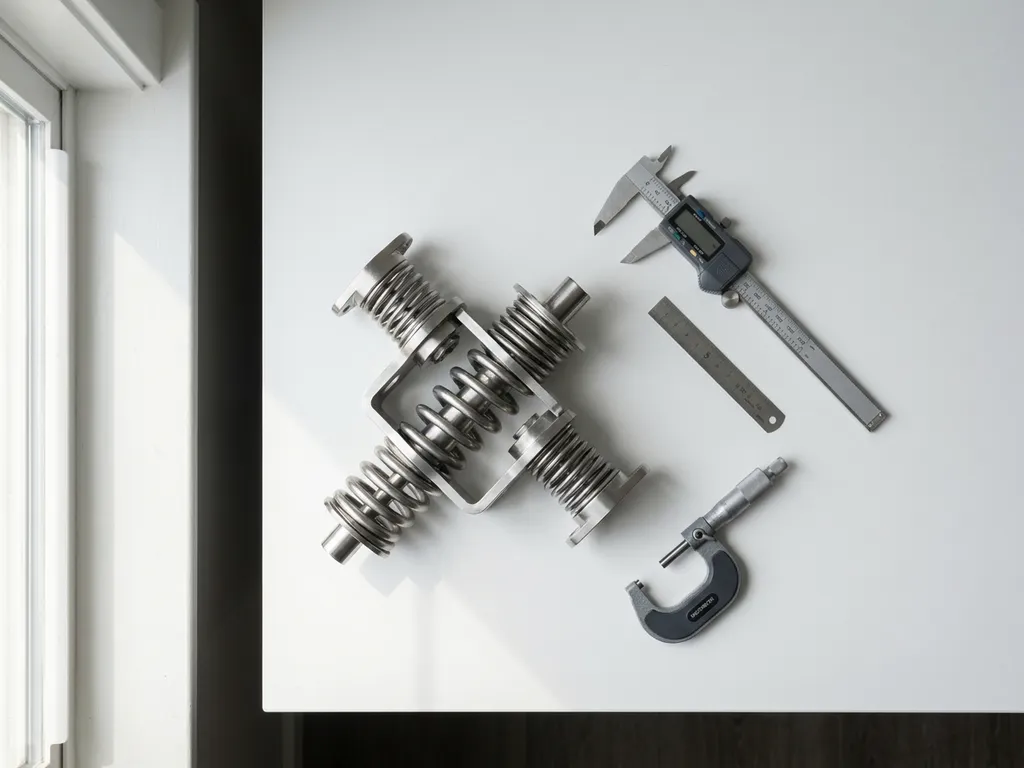
A comprehensive RFQ for custom mechanism design should include detailed technical specifications, performance requirements, environmental conditions, project scope, timeline expectations, and budget parameters. This ensures engineering consultants can provide accurate quotes and develop solutions that meet your exact needs while avoiding costly revisions and project delays.
Vague specifications are costing you time and budget overruns
When your RFQ lacks specific technical details, engineering firms must make assumptions about your requirements, leading to quotes that don’t reflect the actual project complexity. This results in scope creep, change orders, and budget increases that can double your initial investment. To prevent this, define exact performance parameters, load requirements, operating conditions, and interface specifications upfront. The more precise your initial specifications, the more accurate the quotes and timeline estimates you’ll receive.
Missing system integration details signal future compatibility problems
Failing to document how your custom mechanism must integrate with existing equipment creates expensive compatibility issues during implementation. Engineers need complete information about mounting interfaces, control systems, power requirements, and spatial constraints to design a solution that works seamlessly with your current setup. Provide detailed drawings, specifications, and operational requirements for all systems that will interact with the new mechanism to ensure smooth integration from day one.
What is an RFQ for custom mechanism design and why is it important?
An RFQ for custom mechanism design is a formal document that requests detailed quotes from engineering firms to develop specialized mechanical systems tailored to specific applications. It serves as the foundation for successful project outcomes by establishing clear expectations and enabling accurate cost and timeline estimates.
The importance of a well-structured RFQ extends beyond simple price comparison. It acts as a communication tool that translates your operational needs into technical language that engineers can understand and respond to effectively. A comprehensive RFQ reduces the risk of misunderstandings, scope changes, and project delays by establishing clear parameters from the beginning.
Quality RFQs also help you evaluate potential partners based on their technical approach, experience with similar projects, and understanding of your specific challenges. This evaluation process is crucial when selecting an engineering consultant who can deliver not just a working mechanism, but an optimized solution that enhances your operational efficiency.
What technical specifications should be included in a mechanism design RFQ?
Technical specifications should include performance requirements, load capacities, speed parameters, accuracy tolerances, environmental conditions, material preferences, safety requirements, and interface specifications. These details enable engineers to design mechanisms that meet your exact operational needs.
Performance requirements form the core of your technical specifications. Define the forces, torques, speeds, and accelerations your mechanism must handle during normal operation. Include peak loads, duty cycles, and any special operating modes. For example, specify whether the mechanism needs to operate continuously or intermittently, and what happens during emergency stops or power failures.
Environmental specifications are equally critical. Document the temperature range, humidity levels, exposure to chemicals or contaminants, vibration conditions, and any special atmospheric requirements. These factors significantly impact material selection, sealing requirements, and overall design approach.
Don’t forget interface requirements. Specify mounting dimensions, connection types, control signal formats, power supply specifications, and any communication protocols the mechanism must support. Include drawings or dimensional constraints that show how the mechanism fits within your existing system layout.
How do you define project scope and deliverables in an engineering RFQ?
Project scope should clearly define what deliverables you expect, including design documentation, prototypes, testing requirements, manufacturing support, installation assistance, and ongoing maintenance considerations. Specify which phases you want quoted separately and what constitutes project completion.
Break down deliverables into specific categories such as conceptual design, detailed engineering drawings, analysis reports, prototype development, testing protocols, and manufacturing documentation. For each deliverable, specify the format, level of detail, and approval process required.
Consider the entire product lifecycle when defining scope. Will you need support during manufacturing scale-up? Do you require training for your maintenance staff? Should the engineer provide spare parts recommendations or troubleshooting guides? Including these considerations in your RFQ helps avoid surprises later and ensures you receive comprehensive support throughout the project.
Timeline expectations should be realistic and account for design iterations, prototype testing, and potential modifications. Allow engineering firms to propose milestone-based schedules that align with your operational needs while providing adequate time for thorough design and validation.
What information about existing systems should you provide to engineers?
Provide complete documentation of existing systems including technical drawings, specifications, operational procedures, maintenance histories, known issues, and integration requirements. This information helps engineers understand constraints and design compatible solutions that work seamlessly with your current setup.
System documentation should include electrical schematics, mechanical drawings, control logic diagrams, and any relevant standards or certifications your equipment must maintain. If original documentation is unavailable, consider having your systems surveyed and documented before issuing the RFQ.
Operational context is equally valuable. Describe how operators interact with existing equipment, what training they have, and any ergonomic considerations that affect mechanism design. Include information about maintenance procedures, accessibility requirements, and any safety protocols that must be preserved or enhanced.
Historical performance data can guide design decisions. Share information about failure modes, maintenance intervals, and any modifications made to existing systems. This helps engineers avoid known problematic approaches and design more robust solutions.
How should you structure budget and timeline requirements in your RFQ?
Structure budget requirements by requesting separate quotes for different project phases, optional features, and ongoing support services. Provide realistic budget ranges and specify your preferred payment schedule to help engineers propose solutions that align with your financial constraints and cash flow needs.
Request detailed cost breakdowns that separate design work, materials, manufacturing, testing, and implementation support. This transparency helps you understand where your investment goes and makes it easier to adjust scope if needed. Ask for quotes on optional features or alternative approaches that might provide additional value within your budget.
Timeline requirements should balance your operational needs with realistic development schedules. Specify critical milestones such as when you need design approval, prototype delivery, and final implementation. Allow engineers to propose alternative schedules that might reduce costs or improve quality while still meeting your essential deadlines.
Consider requesting quotes for expedited delivery if time is critical, but understand that rushed development often increases costs and may compromise quality. Most complex mechanism designs benefit from thorough development cycles that include proper testing and validation phases.
How InteSpring helps with custom mechanism design RFQs
We provide comprehensive support throughout the RFQ process, from helping you define technical requirements to delivering fully integrated custom mechanisms. Our four-phase approach ensures your project progresses smoothly from concept to production:
- Feasibility analysis to validate the technical and economic viability of your mechanism requirements
- Demonstrator development with functional prototypes that prove concept effectiveness
- Detailed design with complete engineering documentation and testing validation
- Production support including supply chain setup and manufacturing guidance
Our expertise in spring-based energy balancing systems, combined with experience in defense, medical, and industrial applications, enables us to develop innovative solutions that enhance both human and machine performance. Contact us to discuss how we can help transform your mechanism design requirements into reality.
Related Articles
- Why is low-bandwidth sensing critical for gunshot detection technology?
- What is the difference between an engineering consultancy and design firms?
- What is the ROI of lifting aids in manufacturing?
- How will exoskeletons impact aging populations?
- What are the training requirements for military exoskeleton use?