
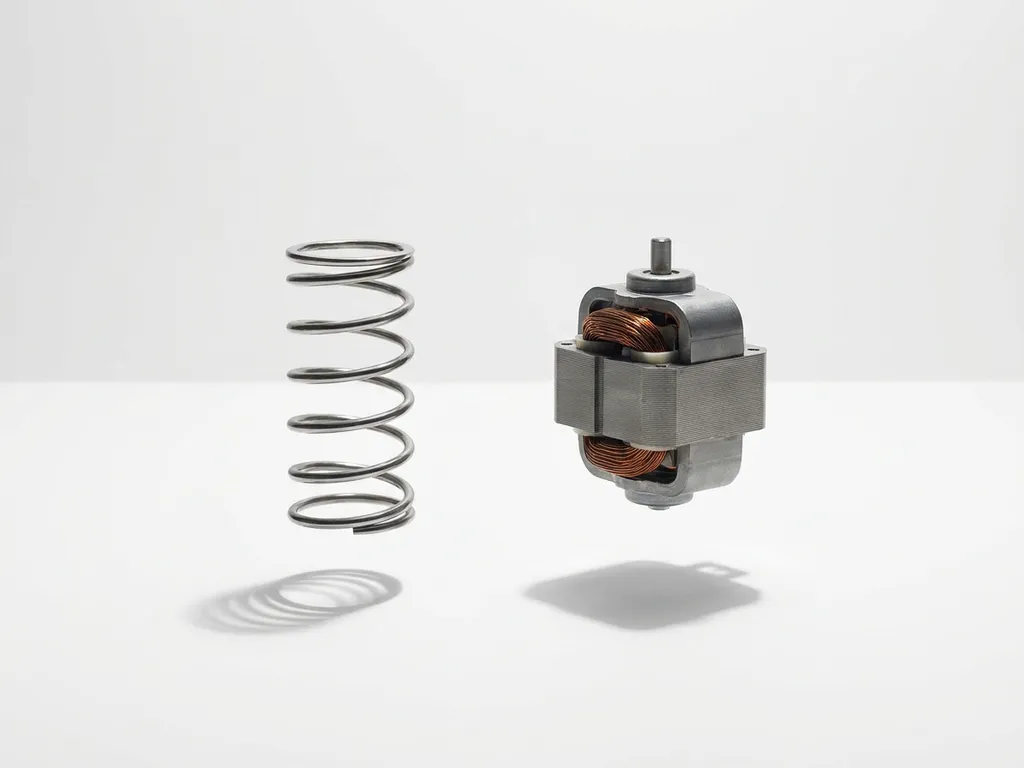
A spring balancer should be used instead of a motorized hoist when you need continuous, effortless positioning of tools or components without electrical power. Spring balancers excel in applications requiring frequent vertical movement, precise positioning, and immediate response, while motorized hoists work better for heavy lifting tasks that don’t require constant repositioning.
Poor tool positioning is costing you productivity and worker fatigue
Workers using heavy tools without proper gravity compensation experience rapid fatigue, reduced precision, and slower task completion. This leads to decreased output, increased error rates, and potential musculoskeletal injuries that drive up healthcare costs and absenteeism. The solution lies in implementing spring-based gravity compensation systems that neutralize tool weight, allowing workers to focus on precision and speed rather than fighting gravity.
Electrical dependencies are limiting your operational flexibility
Relying on motorized systems in environments where power availability is inconsistent or safety regulations restrict electrical equipment creates operational bottlenecks and safety risks. This dependency can shut down critical processes during power outages or in hazardous environments. Mechanical spring systems provide reliable operation independent of electrical infrastructure, ensuring continuous productivity in challenging conditions.
What is the difference between a spring balancer and a motorized hoist?
A spring balancer uses mechanical energy storage to counteract gravitational forces, providing continuous support without electrical power. A motorized hoist uses electric motors to lift and lower loads through controlled mechanical advantage, requiring power and operator control for each movement.
Spring balancers work through compressed springs or gas cylinders that store energy and release it to counterbalance the weight of attached tools or components. This creates a near-weightless feel, allowing operators to position items effortlessly at any height within the working range. The system responds instantly to operator input without delays or power consumption.
Motorized hoists operate through electric motors that drive chains, cables, or other lifting mechanisms. They require electrical connections, control systems, and often remote operators. While they can handle much heavier loads than spring balancers, they lack the continuous, responsive positioning that makes spring systems ideal for repetitive tasks requiring frequent height adjustments.
When does a spring balancer work better than a motorized hoist?
Spring balancers work better when applications require continuous positioning, frequent vertical movement, immediate response, or operation in environments where electrical power is limited or prohibited. They excel in assembly lines, tool positioning, and situations demanding precise manual control.
Manufacturing and assembly operations benefit significantly from spring balancers because workers can position tools and components exactly where needed without operating controls or waiting for motor response. This creates smoother workflows and reduces cycle times in repetitive tasks.
Hazardous environments where electrical equipment poses safety risks, such as areas with explosive atmospheres or high electromagnetic interference, favor spring balancers due to their purely mechanical operation. Similarly, outdoor applications or remote locations where reliable electrical power is unavailable make spring systems the practical choice.
Applications requiring precise manual positioning also favor spring balancers. The direct mechanical connection between operator input and system response provides better tactile feedback and control than motorized systems with their inherent delays and discrete movements.
What are the main advantages of spring balancers over motorized hoists?
Spring balancers offer energy efficiency, immediate response, simplified maintenance, electrical independence, and continuous positioning capability. They consume no electrical power during operation, require minimal maintenance, and provide instant response to operator movements without control delays.
Energy efficiency represents a significant advantage since spring balancers store and release mechanical energy without ongoing power consumption. This eliminates electrical operating costs and reduces facility power requirements, making them environmentally friendly and cost-effective for continuous operation.
Maintenance requirements are substantially lower because spring balancers contain fewer moving parts and no electrical components. This translates to reduced downtime, lower maintenance costs, and longer service life in demanding industrial environments.
The immediate response characteristic allows operators to work at natural speeds without waiting for motor acceleration or deceleration. This responsiveness improves productivity and reduces operator fatigue by eliminating the cognitive load of anticipating system delays.
How do you choose the right lifting solution for your application?
Choose based on load weight, movement frequency, positioning precision requirements, power availability, and environmental conditions. Spring balancers suit lighter loads requiring frequent positioning, while motorized hoists handle heavy lifting tasks with less frequent movement needs.
Load capacity serves as the primary determining factor. Spring balancers typically handle loads up to several hundred pounds effectively, while motorized hoists can manage multi-ton loads. Consider not just maximum weight but also the typical operating range for your application.
Movement patterns significantly influence the choice. Applications requiring constant repositioning, fine adjustments, or operator-controlled positioning favor spring balancers. Tasks involving predetermined lifting cycles, heavy materials transport, or automated sequences work better with motorized hoists.
Environmental factors including power availability, safety regulations, temperature extremes, and contamination levels affect system selection. Spring balancers operate reliably in challenging conditions where electrical systems might fail or pose safety risks.
How InteSpring helps with spring balancer solutions
We specialize in developing custom spring-based gravity compensation systems that enhance both human performance and device functionality. Our engineering consultancy approach covers the complete development process from concept to certified product through our proven four-phase methodology.
- Feasibility analysis to determine the technical and economic viability of spring balancer solutions for your specific application
- Demonstrator development with concept prototypes that prove system effectiveness before full investment
- Detailed design studies with functional prototypes optimized for your operational requirements
- Product development including sustainable supply chain setup for serial production
Our compact team of specialists combines expertise in mechanical engineering, human movement studies, and mechatronics to create fast, powerful, and safe mechanical solutions. With our in-house prototyping capabilities and strong supplier network, we deliver efficient development cycles that get your spring balancer solution to market quickly. Contact us to discuss how our spring balancer expertise can solve your specific lifting and positioning challenges.