
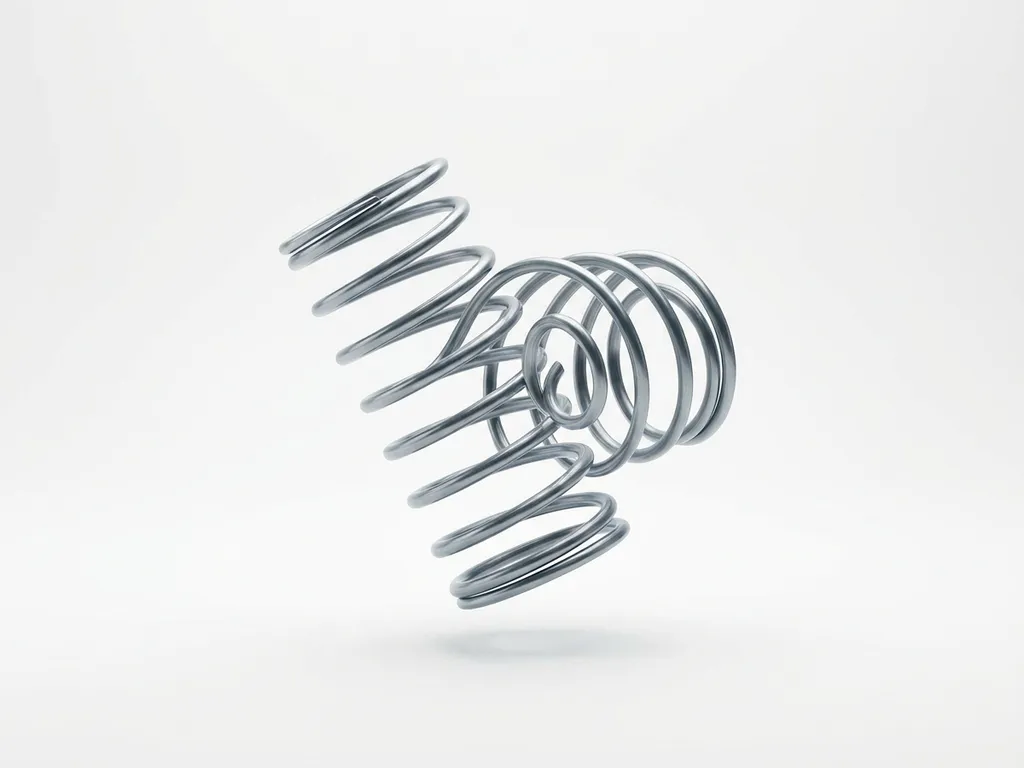
Spring technology has evolved far beyond the simple coil springs found in everyday objects. Modern spring systems represent sophisticated engineering solutions that store, release, and redirect energy with remarkable precision. These advanced mechanisms form the backbone of everything from cutting-edge exoskeletons to industrial automation systems, fundamentally changing how we approach force balancing and mechanical assistance.
Understanding modern spring technology requires looking beyond traditional concepts to explore how energy storage, smart materials, and integrated design principles create mechanical solutions that were impossible just decades ago. This evolution represents a shift from passive components to active systems that can enhance human performance and machine efficiency in ways that redefine mechanical engineering possibilities.
What Makes Modern Spring Technology Different From Traditional Coils
Modern spring technology operates on fundamentally different principles than conventional coil springs, which simply compress and extend in a linear fashion. Advanced spring systems integrate multiple energy storage mechanisms, smart materials, and sophisticated control systems to create responsive, adaptive mechanical solutions.
Traditional coil springs provide constant force relationships where the energy stored increases predictably with compression. Modern spring mechanisms, however, can deliver variable force profiles, negative stiffness characteristics, and even programmable response curves that adapt to changing load conditions. This flexibility allows engineers to create systems that work with human movement patterns rather than against them.
For example, a passive ankle orthosis using modern spring technology can provide negative stiffness around the ankle joint, allowing natural foot positioning, while traditional springs would simply resist movement. The key difference lies in how these systems store and release energy in patterns that complement rather than constrain natural motion.
The integration of microhydraulics, smart materials, and embedded sensors transforms springs from simple mechanical components into intelligent systems that respond dynamically to environmental conditions and user needs.
How Energy Storage Springs Transform Mechanical Performance
Energy storage springs revolutionize mechanical performance by capturing, storing, and strategically releasing energy at precisely the right moments in a mechanical cycle. Unlike traditional springs that simply absorb impact, these systems actively contribute to overall system efficiency and power output.
The fundamental principle involves storing gravitational or kinetic energy during low-demand phases and releasing it during high-demand moments. This approach dramatically reduces the peak power requirements for motors, actuators, or human operators while maintaining consistent performance levels throughout operation cycles.
Consider how energy storage springs function in wearable exoskeletons: during the lowering phase of lifting, the spring system captures the gravitational energy of both the load and the user’s movement. When lifting begins, this stored energy provides assistance, reducing the muscular effort required while maintaining natural movement patterns.
- Peak load reduction of up to 60% in lifting applications
- Extended operational duration through energy recycling
- Smoother power delivery that reduces mechanical stress
- Improved system responsiveness through predictive energy release
This energy management approach enables mechanical systems to operate with greater efficiency while reducing wear on components and minimizing energy consumption from external power sources.
Essential Spring System Types for Engineering Applications
Modern engineering applications utilize several distinct categories of spring systems, each optimized for specific performance requirements and operational environments. Understanding these types enables engineers to select the most appropriate technology for their particular application needs.
Passive Spring Systems
Passive spring systems operate without external power, relying entirely on mechanical energy storage and release. These systems excel in applications requiring consistent, predictable force profiles and minimal maintenance requirements. Gas springs, leaf spring assemblies, and torsion bar systems represent common passive implementations that provide reliable performance across millions of cycles.
Semi-Passive Systems
Semi-passive spring systems combine mechanical energy storage with minimal electronic control, typically using sensors and small actuators to modify spring characteristics in real-time. These systems offer the reliability of passive mechanisms while providing limited adaptability to changing conditions.
Active Spring Systems
Active spring systems integrate motors, hydraulics, or pneumatic actuators with spring mechanisms to create fully controllable force profiles. While requiring external power, these systems can provide complex force patterns, negative stiffness, and real-time adaptation to user needs or environmental changes.
For example, an active spring system in a leg exoskeleton can provide different assistance levels during walking versus running, automatically adjusting spring rates based on gait analysis and user feedback.
Design Principles That Make Spring Systems Work
Successful spring system design relies on several critical principles that ensure optimal performance, durability, and integration with larger mechanical systems. These principles guide engineers in creating solutions that enhance rather than complicate existing mechanical designs.
Force balancing represents the foundational principle, requiring precise calculation of gravitational forces, inertial loads, and dynamic forces throughout the entire operational range. Engineers must account for varying load conditions, user characteristics, and environmental factors to achieve consistent performance across all operating scenarios.
Energy efficiency optimization focuses on minimizing energy losses through friction, heat generation, and mechanical inefficiencies. Modern spring systems achieve efficiency levels exceeding 90% through careful material selection, precision manufacturing, and optimized mechanical geometries that reduce parasitic losses.
Human-centered design principles ensure that spring systems complement natural human movement patterns rather than constraining them. This approach requires a deep understanding of biomechanics, joint kinematics, and muscle activation patterns to create assistance that feels natural and intuitive to users.
- Compliance matching to human joint stiffness characteristics
- Timing synchronization with natural movement rhythms
- Force profile optimization for different activity types
- Comfort and safety integration throughout the design process
Why Spring Technology Integration Fails and How to Prevent It
Spring technology integration failures typically stem from inadequate understanding of system interactions, insufficient testing protocols, or misalignment between spring characteristics and application requirements. Recognizing these failure modes enables engineers to implement preventive measures during the design phase.
The most common failure involves force profile mismatches where the spring system provides assistance at the wrong times or with inappropriate force levels. This occurs when engineers design springs based on theoretical models without sufficient validation using real-world operating conditions and user feedback.
Mechanical integration problems arise when spring systems interfere with existing mechanisms, create unwanted vibrations, or introduce instability into the overall system. These issues often result from inadequate analysis of system dynamics and insufficient consideration of how spring forces interact with other mechanical components.
Prevention strategies focus on comprehensive testing protocols that validate spring performance across the full range of operating conditions. This includes environmental testing, user studies, and long-term durability assessment to ensure reliable performance throughout the system’s operational life.
- Prototype testing with actual users in realistic environments
- Comprehensive failure mode analysis during design phases
- Integration testing with complete system assemblies
- Iterative design refinement based on performance data
Successful integration also requires close collaboration between spring system designers and end-users to ensure that theoretical performance translates into practical benefits in real-world applications.
How InteSpring Helps with Modern Spring Technology
We specialize in developing sophisticated spring systems that balance gravitational forces through smart energy storage mechanisms, transforming how engineers approach mechanical assistance and force balancing challenges. Our expertise spans the complete development process from initial concept validation through certified product delivery.
Our modular four-phase consultancy approach ensures successful spring technology integration:
- Feasibility Phase: We research technical and economic viability, identifying optimal spring solutions for your specific application requirements
- Demonstrator Phase: Our team develops initial prototypes that validate core spring concepts and performance characteristics
- Design Phase: We conduct detailed design studies with functional prototypes, optimizing spring systems for real-world performance
- Product Phase: We establish sustainable supply chains for serial production, ensuring consistent quality and performance
Our compact team of specialists approaches spring systems from mechanical, structural, mechatronic, and human-interactive engineering perspectives, creating solutions that enhance both human performance and device efficiency. Contact our engineering team to discuss how modern spring technology can solve your specific mechanical challenges and enhance your next project’s performance.