
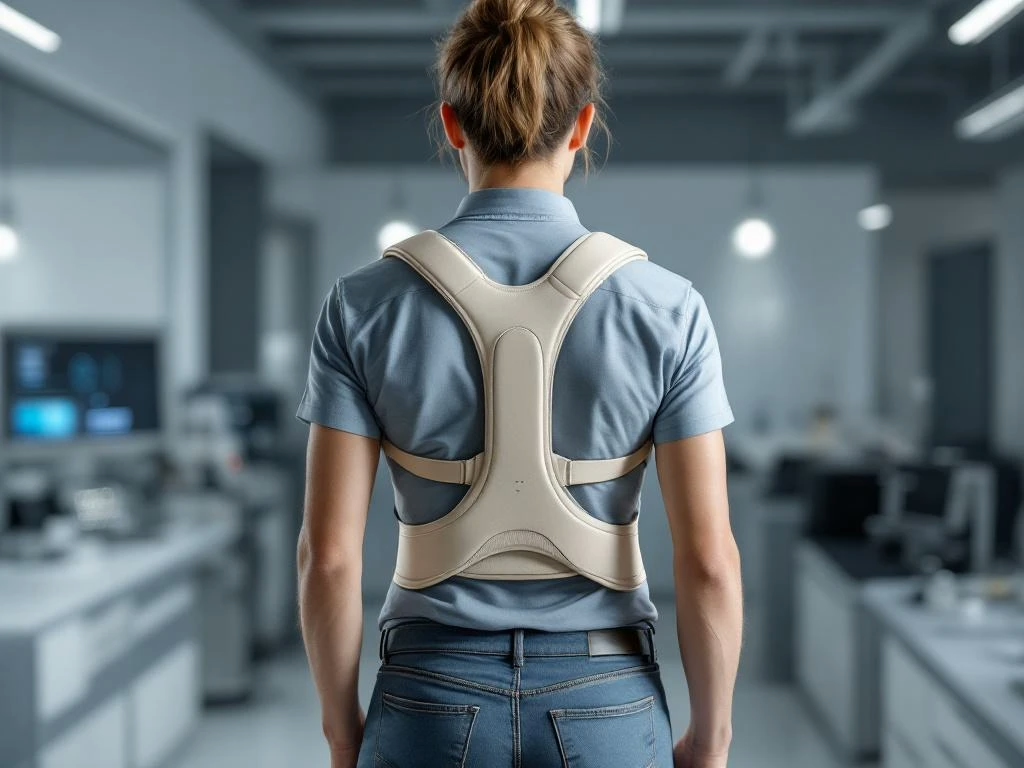
Physiotherapists should recommend exoskeleton therapy when patients have neurological conditions, mobility impairments, or recovery needs that benefit from assisted movement and gait training. The technology works best for stroke recovery, spinal cord injuries, and conditions where traditional therapy alone shows limited progress. Timing depends on patient stability, cognitive readiness, and specific therapeutic goals that align with exoskeleton capabilities.
What exactly is exoskeleton therapy and how does it work?
Exoskeleton therapy uses wearable robotic devices that provide mechanical support and assistance to help patients relearn movement patterns and improve mobility. These devices work by compensating for gravitational forces and providing controlled assistance during walking, standing, or specific exercises.
The technology operates through sophisticated systems that detect user intent and provide appropriate support. Sensors monitor movement patterns while motors and springs deliver precise assistance when needed. This creates a safe environment where patients can practise movements they could not perform independently.
Different types of exoskeletons serve various rehabilitation needs. Gait training exoskeletons focus on walking patterns, while upper limb devices assist arm and hand movements. Some provide full support for paralysed patients, while others offer partial assistance to strengthen existing muscle function. The level of assistance adjusts as patients progress, gradually reducing support to encourage natural movement recovery.
Which patient conditions benefit most from exoskeleton therapy?
Neurological conditions respond particularly well to exoskeleton therapy, especially stroke, spinal cord injuries, multiple sclerosis, and cerebral palsy. These conditions often involve disruption of movement patterns, where guided, repetitive practice proves beneficial.
Stroke patients benefit from gait retraining and balance improvement during recovery phases. The technology helps rebuild neural pathways through consistent, correct movement patterns. Patients with spinal cord injuries use exoskeletons for mobility maintenance, bone density preservation, and cardiovascular health improvement.
Musculoskeletal injuries involving prolonged immobility also benefit from exoskeleton support. Patients recovering from major orthopaedic procedures can maintain movement patterns while protecting healing tissues. Progressive muscle weakness conditions such as muscular dystrophy benefit from mobility preservation and extended independence.
Age-related mobility decline responds well to exoskeleton assistance, particularly when combined with strength training programmes. The technology helps maintain activity levels while building confidence in movement abilities.
How do you assess if a patient is ready for exoskeleton therapy?
Patient readiness requires adequate cognitive function to follow instructions, sufficient trunk control for device stability, and medical clearance for weight-bearing activities. Skin integrity must be intact where the device contacts the body.
Physical assessment includes evaluating joint range of motion, as significant contractures may prevent proper device fitting. Weight and height must fall within device specifications. Cardiovascular stability is important, as exoskeleton therapy can be physically demanding.
Cognitive requirements include understanding safety procedures and the ability to communicate discomfort or problems. Patients need a sufficient attention span for therapy sessions, typically 30–60 minutes. Motivation and realistic expectations significantly influence treatment outcomes.
Contraindications include unstable fractures, severe spasticity preventing device fitting, active infections, and certain cardiovascular conditions. Pregnancy, severe osteoporosis, and uncontrolled seizures also require careful consideration. Each patient needs an individual risk–benefit assessment before starting therapy.
What’s the difference between exoskeleton therapy and traditional physiotherapy?
Exoskeleton therapy provides mechanical assistance that enables movements patients cannot perform independently, while traditional physiotherapy relies on existing patient abilities and therapist guidance. Both approaches complement each other rather than compete.
Traditional physiotherapy excels at manual techniques, joint mobilisation, and personalised exercise prescription. It addresses pain management, tissue healing, and movement quality through hands-on treatment. Therapists provide real-time feedback and adapt techniques instantly based on patient response.
Exoskeleton therapy offers consistent, repeatable movement patterns with precise assistance levels. It enables high-repetition practice, which is important for neuroplasticity and motor learning. The technology provides objective data on progress and performance metrics.
Integrated strategies work best, using exoskeletons for specific movement training while maintaining traditional approaches for flexibility, strength, and functional skills. The combination allows patients to practise movements with mechanical support, then transfer skills to independent activities through conventional therapy methods.
How do you introduce exoskeleton therapy to patients and families?
Start by explaining that exoskeleton therapy is a tool that assists movement practice, not a cure or a replacement for natural recovery processes. Focus on realistic goals and how the technology supports existing rehabilitation efforts.
Address common misconceptions about robotic therapy replacing human therapists or providing miraculous recovery. Explain that exoskeletons enhance therapy by enabling practice of movements that would not otherwise be possible. Emphasise the collaborative relationship between technology, therapist, and patient effort.
Demonstrate the device when possible, showing how it operates and feels. Let patients and families ask questions about comfort, safety, and expected sensations. Explain the gradual progression approach and how assistance levels adjust as abilities improve.
Discuss potential challenges honestly, including initial unfamiliarity with the device, possible fatigue, and the need for patience with progress. Set clear expectations about therapy duration, frequency, and realistic outcomes based on individual conditions and goals.
How Intespring helps physiotherapists with exoskeleton therapy decisions
We support healthcare professionals through comprehensive consultation services that help determine when exoskeleton therapy suits specific patient needs. Our engineering expertise in spring-based assistance systems provides unique insights into device selection and implementation strategies.
Our support includes:
- Device demonstrations with multiple exoskeleton systems for hands-on evaluation
- Patient assessment guidance to identify suitable candidates for therapy
- Technical training on device operation and safety protocols
- Implementation planning for integrating exoskeletons into existing therapy programmes
- Ongoing technical support and troubleshooting assistance
We combine a deep understanding of human movement mechanics with practical engineering solutions to help physiotherapists make informed decisions about exoskeleton therapy implementation. Our collaborative approach ensures that technology serves patient needs effectively while supporting clinical goals.
Contact us to discuss how exoskeleton therapy might benefit your patients and to explore demonstration opportunities for your clinical team.