
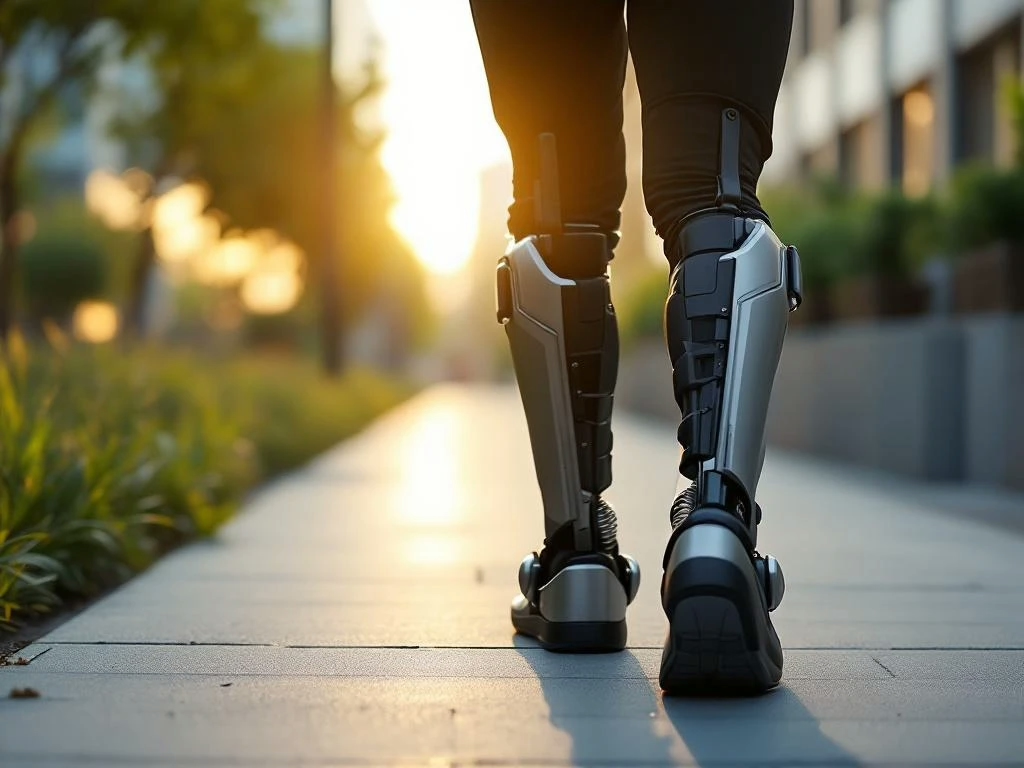
Exoskeletons offer powerful benefits for workers facing physically demanding tasks. These wearable devices reduce strain on your body, prevent injuries, and help you maintain strength throughout long shifts. By supporting natural movements and redistributing weight, exoskeletons let you work more comfortably and safely across industries like logistics, manufacturing, healthcare, and construction.
What exactly is an exoskeleton and how does it work?
An exoskeleton is a wearable device that attaches to your body to support movement and reduce physical strain during work tasks. These mobility aids for walking and lifting work by transferring weight away from vulnerable areas like your back, legs, or shoulders onto the device’s frame, which then redirects forces to stronger parts of your body or the ground.
The basic mechanics vary between two main types. Passive exoskeletons use springs and mechanical systems to store and release energy as you move. When you bend forward, springs compress and store energy. When you stand up, they release that energy to help you lift. This happens without batteries or motors, making them lightweight and simple to use.
Active exoskeletons use motors and batteries to power movement assistance. Sensors detect your intended motion, and motors provide force to help you complete the task. Think of it like power steering in a car, but for your body movements.
Spring-based energy storage is particularly effective because it works with your natural movement patterns. The springs compress during one phase of movement and return energy during the next phase, creating a smooth, continuous support cycle that feels natural rather than mechanical.
What are the main benefits of using an exoskeleton at work?
Exoskeletons deliver several concrete benefits that improve both worker wellbeing and work performance. These wearable technology solutions address the physical challenges that lead to fatigue, discomfort, and long-term health problems in physically demanding jobs.
The primary benefits include:
- Injury prevention – Reduces stress on joints and muscles that commonly lead to workplace injuries, particularly in the lower back, shoulders, and knees
- Reduced physical strain – Distributes weight and forces more evenly across your body, preventing overload on specific areas
- Decreased fatigue – Helps you maintain energy levels throughout shifts by reducing the muscular effort required for repetitive tasks
- Improved posture – Encourages proper body mechanics during lifting, bending, and reaching activities
- Extended working capacity – Allows you to perform physically demanding tasks for longer periods without exhaustion
- Enhanced worker wellbeing – Reduces daily discomfort and helps prevent cumulative damage that leads to chronic conditions
These benefits translate to practical improvements in your daily work experience. You finish shifts feeling less exhausted, experience fewer aches and pains, and reduce your risk of developing long-term musculoskeletal problems that could affect your career and quality of life.
Who should use an exoskeleton and in what situations?
Exoskeletons benefit workers who regularly perform physically demanding tasks involving repetitive movements, heavy lifting, prolonged awkward postures, or extended periods of standing and walking. If your job requires sustained physical effort that leaves you fatigued or sore, an exoskeleton could help.
Specific industries and roles where exoskeletons provide the most value include:
Logistics and warehousing – Workers lifting packages, loading vehicles, or moving inventory repeatedly throughout shifts benefit from back and leg support that reduces cumulative strain.
Manufacturing – Assembly line workers, particularly those working overhead or in bent positions, use exoskeletons to maintain posture and reduce shoulder and back fatigue during repetitive tasks.
Defence – Military personnel carrying heavy equipment over long distances use leg exoskeletons to improve endurance and reduce lower body fatigue during operations.
Construction – Workers performing overhead tasks, carrying materials, or working in awkward positions benefit from support that reduces strain on shoulders, backs, and legs.
Healthcare – Nurses and caregivers who regularly lift or reposition patients use back-support exoskeletons to prevent injury during patient handling.
Agriculture – Workers performing repetitive bending, lifting, and carrying tasks during planting, harvesting, or animal care reduce back strain with supportive wearable technology.
The types of movements that make exoskeletons particularly useful include frequent lifting and lowering, sustained forward bending, overhead work, carrying heavy loads while walking, and any repetitive motion that creates cumulative stress on specific body parts.
How do exoskeletons help prevent back pain and injuries?
Exoskeletons prevent back pain by reducing biomechanical load on your spine during physically demanding tasks. They work by supporting your torso and redirecting forces away from your lower back muscles and vertebrae, which are particularly vulnerable to strain and injury during bending, lifting, and twisting movements.
When you bend forward without support, your back muscles work hard to control the movement and support your upper body weight. Add a heavy object, and the forces on your spine multiply significantly. An exoskeleton provides mechanical support that takes over much of this work, dramatically reducing the stress on your back muscles and spinal discs.
The devices distribute weight more effectively by transferring loads through the exoskeleton’s frame to stronger, less vulnerable parts of your body. Rather than your lower back bearing the full burden, forces spread across your hips, legs, and core, creating a more balanced load distribution.
Exoskeletons also support proper lifting mechanics by encouraging you to maintain better posture during tasks. The mechanical support makes it easier to keep your back in a neutral position rather than rounding your spine, which is when injuries most commonly occur.
Perhaps most importantly, these mobility aids for walking and lifting decrease cumulative strain from repetitive movements. Each individual lift might not cause injury, but performing hundreds of lifts daily creates accumulated damage over weeks, months, and years. By reducing the load on each repetition, exoskeletons help prevent the gradual wear that leads to chronic back problems.
What’s the difference between passive and active exoskeletons?
Passive exoskeletons use springs, counterweights, or mechanical systems without requiring power sources, while active exoskeletons use motors and batteries to provide powered assistance. Both types support your movements, but they work differently and suit different situations.
Passive systems rely on spring-based energy storage and mechanical advantage. They’re lighter, simpler, and require no charging or power management. You can use them throughout entire shifts without worrying about battery life. They work particularly well for repetitive tasks with predictable movement patterns, like lifting boxes or working in bent positions.
The advantages of passive exoskeletons include lower cost, reduced maintenance, lighter weight, and unlimited operation time. They’re also more intuitive because they respond directly to your movements without electronic delays. However, they provide less adjustable assistance and work best for specific, repeated movements rather than varied tasks.
Active systems use sensors to detect your intended movements and motors to provide powered assistance. They can deliver more force assistance and adapt to different tasks more flexibly. Active exoskeletons suit situations requiring variable support levels or higher force assistance than passive systems can provide.
The advantages of active exoskeletons include adjustable assistance levels, higher force output, and adaptability to varied tasks. However, they cost more, require regular charging, weigh more due to batteries and motors, and need more maintenance. Battery life typically limits use to several hours before recharging.
Cost considerations differ significantly. Passive systems generally cost less upfront and have minimal ongoing costs. Active systems require larger initial investment plus ongoing costs for electricity, battery replacement, and more complex maintenance.
Mobility factors also vary. Passive exoskeletons allow freer movement since they don’t restrict you with motor limitations or power concerns. Active systems may feel more restrictive but can provide assistance during a wider range of movements.
How InteSpring helps you get the benefits of exoskeleton technology
We specialise in developing passive exoskeleton solutions that deliver real benefits for demanding work environments. Our approach focuses on spring-based systems that work naturally with your body, providing reliable support without the complexity of powered systems.
Our specific products address different physical demands:
- Centaur – A lightweight leg exoskeleton designed for carrying heavy equipment during extended walking. Originally developed for defence applications, it reduces leg fatigue during long marches and helps you maintain endurance when transporting loads on foot
- Laevo – A back-support exoskeleton that prevents back pain in situations requiring mobility and frequent bending. The technology behind Laevo provides mechanical support that reduces strain during lifting, bending, and working in forward-leaning positions
Our passive spring-based technology offers distinct advantages. The systems are lightweight, operate indefinitely without charging, and work intuitively with your natural movements. We’ve also developed specialised microhydraulics specifically for wearable applications, giving our solutions a unique technological edge in achieving maximum performance.
Beyond products, we offer a complete consultancy approach covering development from initial concept through to certified production. We can assess your specific needs, develop custom solutions, and help you implement exoskeleton technology effectively in your operations.
We also provide hands-on demonstrations featuring multiple exoskeleton systems. This lets you experience the technology directly and understand how different solutions work for various tasks and environments. Our team provides expert guidance on implementation strategies tailored to your specific industry and applications.
If you’re interested in exploring how exoskeleton technology can benefit your organisation, contact us to arrange a demonstration or discuss your specific requirements. We’ll help you understand which solutions best address your physical demands and how to implement them effectively.