
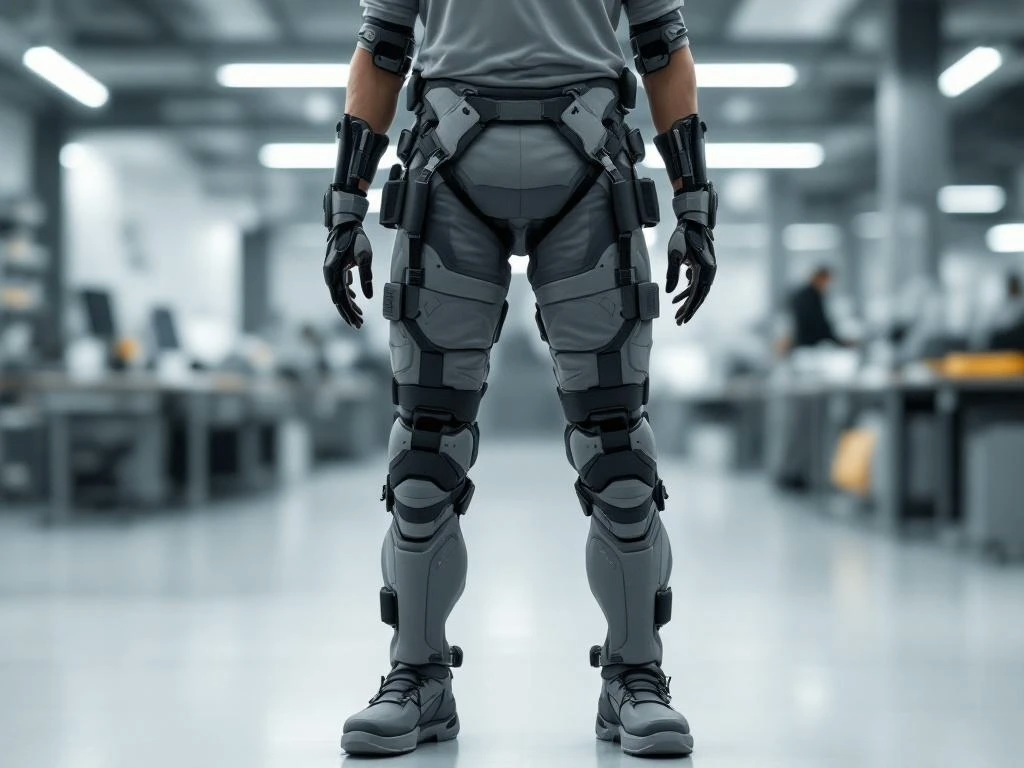
Defense forces can benefit significantly from investing in exoskeleton technology, particularly for logistics operations, extended missions, and heavy equipment transport. Modern military exoskeletons reduce soldier fatigue by up to 40% while increasing carrying capacity and preventing injuries. The investment typically pays for itself through reduced medical costs, improved operational effectiveness, and enhanced soldier performance. However, successful implementation requires careful consideration of training, maintenance, and integration challenges, alongside clear application priorities.
What exactly are military exoskeletons and how do they work?
Military exoskeletons are wearable mechanical systems that augment human strength and endurance by redistributing weight and providing force assistance. These devices work by transferring loads from the soldier’s body to the ground through an external framework, reducing stress on joints and muscles during physical tasks.
Two main types serve different military needs. Powered exoskeletons use motors and batteries to actively assist movement, providing significant strength enhancement for lifting heavy objects or carrying equipment over long distances. Passive exoskeletons rely on springs, mechanical linkages, and gravity to redistribute forces without requiring power, making them lighter and more reliable in field conditions.
The fundamental principle involves load distribution and force redirection. When a soldier carries a heavy pack, the exoskeleton channels that weight through its frame directly to the ground, bypassing the wearer’s spine and legs. This mechanical advantage allows personnel to carry more equipment for longer periods while maintaining mobility and reducing fatigue-related performance degradation.
What are the real benefits of exoskeletons for defense forces?
Reduced soldier fatigue and injury prevention represent the primary advantages of military exoskeleton technology. Studies show these systems can decrease metabolic energy expenditure by 15–40% during load-carrying tasks, allowing troops to maintain peak performance throughout extended operations.
Enhanced carrying capacity enables soldiers to transport additional ammunition, medical supplies, or communication equipment without compromising mobility. This capability proves particularly valuable during resupply missions, forward deployment operations, and situations where vehicle access is limited.
Injury prevention benefits extend beyond immediate operational advantages. Lower back injuries account for significant military medical costs and personnel downtime. Exoskeletons reduce spinal compression and muscle strain, potentially decreasing injury rates by 20–30% in high-risk activities.
Operational effectiveness improves through sustained performance capabilities. Soldiers using exoskeletons maintain better accuracy, decision-making ability, and physical coordination during extended missions because they experience less physical stress and fatigue accumulation.
How much do military exoskeletons actually cost and what’s the ROI?
Military exoskeleton systems typically cost between £15,000 and £80,000 per unit, depending on complexity and capabilities. Total implementation costs include initial procurement, training programs, maintenance infrastructure, and ongoing operational support, often reaching £100,000–£150,000 per system over five years.
Return-on-investment calculations must consider multiple factors. Medical cost savings from reduced injuries can reach £5,000–£15,000 per soldier annually when accounting for treatment, rehabilitation, and replacement personnel costs. Training efficiency improvements reduce preparation time by 10–20% for load-crying exercises.
Operational benefits include extended mission duration capabilities, reduced personnel requirements for logistics tasks, and improved mission success rates. These advantages often justify costs through enhanced operational effectiveness rather than direct financial savings.
Long-term ROI improves as technology matures and production scales increase. Early adopters face higher costs but gain valuable experience and competitive advantages. Most defense organizations see positive returns within three to five years when factoring in injury prevention and operational improvements.
What challenges do defense forces face when implementing exoskeleton technology?
Training requirements and soldier acceptance present the most immediate implementation challenges. Personnel need 20–40 hours of training to become proficient with exoskeleton systems, and some soldiers initially resist adopting new equipment that changes familiar movement patterns.
Maintenance complexity requires specialized technical support and spare-parts inventory. Field repairs often prove difficult, and backup systems become necessary for critical operations. This infrastructure demand increases logistical burden and operational costs.
Integration with existing equipment poses ongoing challenges. Current military gear, vehicles, and procedures were not designed with exoskeletons in mind. Modifications to body armor, weapon systems, and transport equipment often become necessary.
Environmental durability concerns include performance in extreme temperatures, water resistance, and reliability under combat conditions. Battery-life limitations affect powered systems, while mechanical wear impacts passive devices. These factors require careful evaluation against operational requirements.
Which military applications show the most promise for exoskeleton technology?
Logistics operations and supply chain activities offer the highest immediate value for exoskeleton implementation. Loading aircraft, moving ammunition, and establishing forward bases involve repetitive heavy lifting that directly benefits from mechanical assistance and injury prevention.
Extended patrol missions gain significant advantages from exoskeleton support. Long-range reconnaissance, border security operations, and multi-day foot patrols benefit from reduced fatigue and increased equipment-carrying capacity without compromising mobility or stealth requirements.
Heavy equipment transport scenarios show excellent results. Artillery setup, communications equipment deployment, and medical evacuation operations often require personnel to carry loads exceeding safe manual-handling limits. Exoskeletons enable these tasks while protecting soldier health.
Specialized tactical situations include explosive ordnance disposal, where heavy protective equipment limits mobility, and urban operations requiring extended periods of heavy gear usage. These applications justify higher costs through improved safety and operational effectiveness.
How InteSpring helps defense forces with exoskeleton solutions
We provide comprehensive exoskeleton development and implementation support specifically tailored for defense applications. Our Centaur lightweight semi-passive leg exoskeleton addresses the unique requirements of military operations, from low-risk approach marches to forward-base logistics.
Our specialized approach includes:
- Complete feasibility analysis covering technical and economic viability for your specific applications
- Custom demonstrator development with initial prototypes for field testing
- Detailed design studies producing functional prototypes optimized for military environments
- Sustainable supply chain setup for serial production and ongoing support
- Hands-on demonstrations featuring multiple exoskeleton systems for evaluation
- Expert guidance on implementation strategies and integration planning
Our modular four-phase consultancy approach ensures successful technology adoption from initial concept through certified product delivery. We work directly with defense organizations to develop balancing solutions that meet operational requirements while addressing practical implementation challenges.
Contact us today to discuss how our exoskeleton expertise can enhance your defense capabilities and to explore demonstration opportunities for your specific operational needs.